Whispers of Nashville: Brenda Lee and the Four Voices That Defined an Era
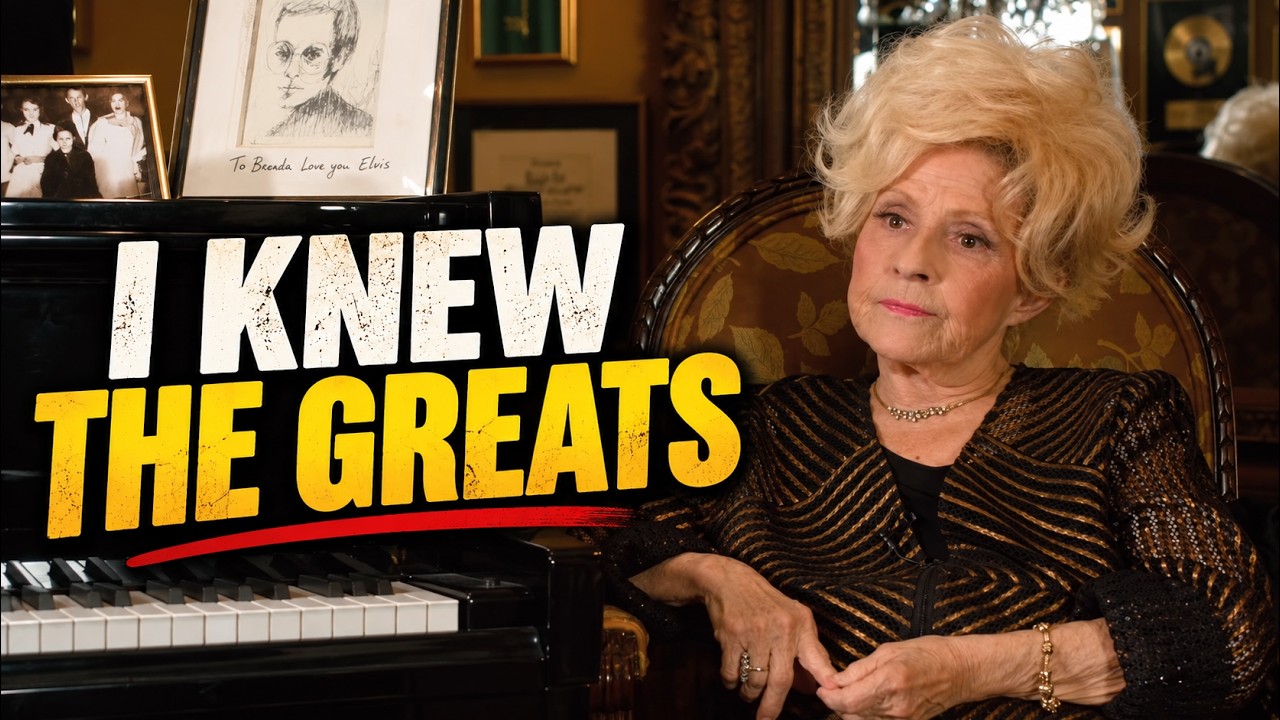
At 81 years old, the legendary Brenda Lee looks back on the golden age of American music, a time when true artistic titans walked the earth and forever altered the cultural landscape. Few living artists possess a perspective as rich or intimate as “Little Miss Dynamite.” As she reflects on her extraordinary journey, four monumental figures stand out in her memory—Patsy Cline, Ray Charles, Elvis Presley, and Willie Nelson. These were not just names on a marquee to Lee; they were peers, confidants, and forces of nature whose unmistakable voices helped shape the very soul of a nation.
The bond between Brenda Lee and Patsy Cline was forged in the grueling crucible of the late 1950s touring circuit. Cline was more than a contemporary; she was a protective older sister figure in a fiercely male-dominated industry. Lee frequently recalls Cline’s fierce independence, maternal warmth, and that rich, emotionally raw contralto voice that could stop a room dead in its tracks. Their lifelong friendship remains a testament to a time when Nashville was a tight-knit community of dreamers, before it became a multi-billion-dollar global industry.
By 1957, the musical landscape was shifting beneath the feet of traditionalists, spearheaded by a charismatic young rebel named Elvis Presley. Brenda Lee first crossed paths with Elvis backstage at the Grand Ole Opry, a pivotal moment where the raw energy of rockabilly collided with the establishment. Beyond the shaking hips and the screaming crowds, Lee remembers Presley as a remarkably polite, deeply spiritual young man who carried the heavy crown of fame with unexpected humility. He was a groundbreaking artist who reshaped popular culture, yet he always maintained a profound respect for the roots of the music they both loved.
As the 1960s roared into gear, Lee found herself sharing the upper stratospheres of the Billboard charts with the genius himself, Ray Charles. While Lee was shattering records as a premier crossover vocalist, Charles was busy dismantling the genres of rhythm, blues, and country music entirely. Their careers ran parallel during this golden era, driven by a mutual mastery of crossing musical borders. To Lee, Charles represented the absolute pinnacle of soul—an artist who could infuse a simple country ballad with such profound, universal heartache that it transcended race, class, and genre.
No chronicle of American music is complete without the rebel poet of the modern era, Willie Nelson. As pillars of the evolving Nashville scene, Lee and Nelson witnessed the industry transform from the polished “Nashville Sound” to the gritty, authentic rebellion of the Outlaw movement. Nelson’s unmistakable, conversational vocal delivery and idiosyncratic guitar styling provided a stark contrast to the studio production of the day. Their overlapping careers served as the vital connective tissue that preserved the timeless standards of American roots music while boldly driving it into the future.
Looking back from the vantage point of eight decades, Brenda Lee’s reflections offer more than mere nostalgia; they serve as a vital historical bridge. The voices of Cline, Presley, Charles, and Nelson were distinct, yet they shared a singular, irreplaceable quality: an undeniable presence. They did not just sing songs—they lived them, leaving an indelible imprint on the global consciousness. Through Lee’s memories, we are reminded of an era when music was defined by raw talent, genuine camaraderie, and a relentless pursuit of artistic truth.
Ultimately, Brenda Lee’s journey reminds us that the true power of music lies in its ability to endure long after the final note has faded. The legacies of her four great friends continue to echo through modern airwaves, serving as the blueprint for generations of vocalists who followed. As Lee honors their memory, she also solidifies her own place among them—not just as a witness to history, but as an architect of the American soundtrack.