What Really Ended Sondra Locke Is Nothing But A Tragedy..
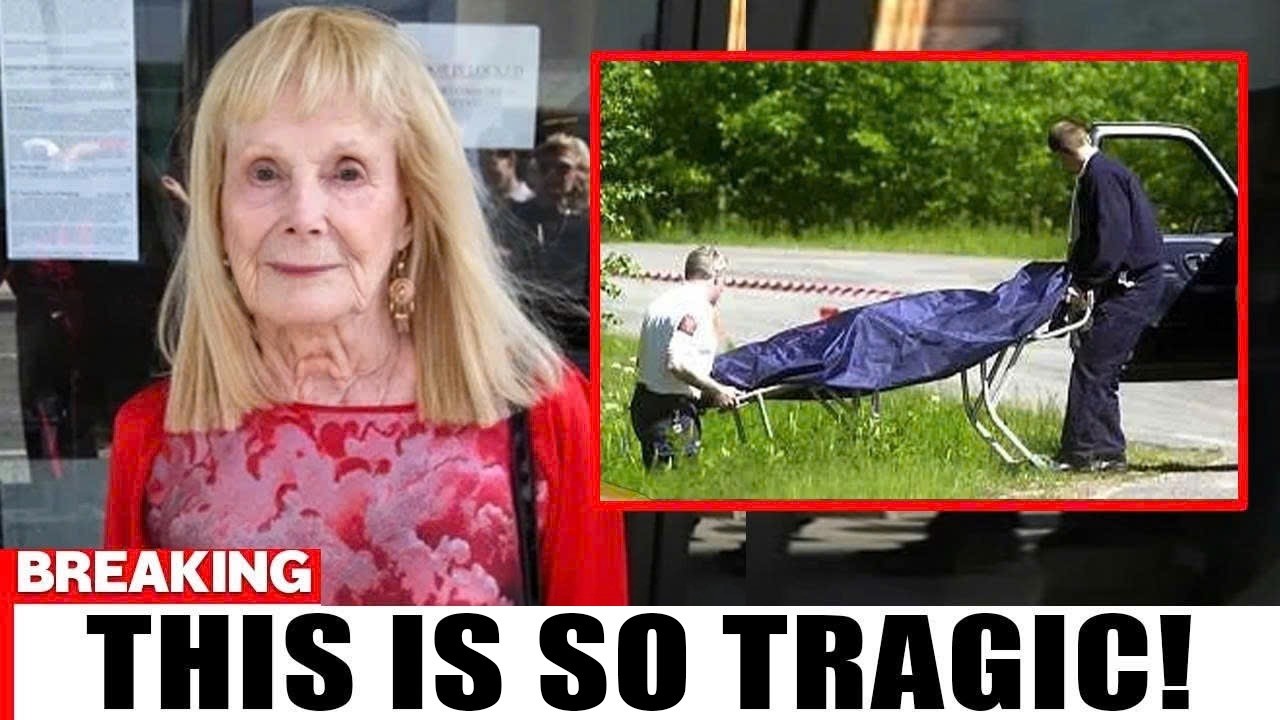
In the glittering, often unforgiving landscape of Hollywood, few stories carry the heavy weight of systemic erasure quite like that of Sondra Locke. When the Oscar-nominated actress passed away on November 3, 2018, at the age of 74 due to cardiac arrest stemming from breast and bone cancer, the news was met with a devastating silence from the industry she had once captivated. For decades, her narrative was pushed to the fringes, obscured by the towering shadow of her former romantic and professional partner, Clint Eastwood. Yet, to look closely at Locke’s trajectory is to witness a profound tragedy—not just of a life cut short by illness, but of a brilliant artistic voice deliberately silenced by the machinations of power.
Long before she became a fixture in tabloid headlines, Sondra Locke proved herself to be an extraordinary, singular talent on the silver screen. In 1968, with absolutely no prior professional film experience, she secured the role of Mick Kelly in the cinematic adaptation of Carson McCullers’ The Heart Is a Lonely Hunter. Her raw, deeply empathetic performance earned her an Academy Award nomination for Best Supporting Actress, signaling the arrival of a major new force in American cinema. Locke possessed a fragile yet fierce screen presence, a unique duality that should have guaranteed her a lifetime of diverse, challenging roles.
Instead, her career became inextricably linked with Clint Eastwood, a partnership that initially brought box-office gold but ultimately cost Locke her professional identity. Throughout the late 1970s and 1980s, the duo co-starred in six major commercial hits, including the critically acclaimed revisionist Western The Outlaw Josey Wales (1976) and the high-octane Dirty Harry thriller Sudden Impact (1983). While these projects cemented Eastwood’s status as an indestructible American icon, Locke was increasingly relegated to the role of the loyal partner, both on and off-screen, her individual artistry gradually swallowed by the overwhelming gravity of Eastwood’s celebrity.
The true devastation began when their 13-year relationship collapsed acrimoniously, exposing the dark underbelly of Hollywood’s power dynamics. In 1996, Sondra Locke took the extraordinary risk of suing Eastwood for fraud, alleging that he had orchestrated a calculated, sham directing development deal for her at Warner Bros. according to contemporaneous legal records. The lawsuit claimed that Eastwood paid the studio to reject every single one of Locke’s pitches, effectively trapping her in a professional vacuum to prevent her from working. It was a classic, ruthless exercise in industry blacklisting, designed to render a formidable woman entirely powerless.
During the tense jury deliberations of that high-stakes trial, the legal war culminated in an out-of-court settlement for an undisclosed financial sum. Locke bravely stood her ground against a titan, declaring to the press that her primary goal was never money, but rather a public defense of her professional rights as a director and an artist. “This was never about money,” Locke stated firmly during the proceedings, “it was about my fighting for my professional rights.” While the settlement provided a degree of legal vindication, the structural damage to her Hollywood career was already permanent and irreversible.
In the painful aftermath of the trial, the industry quietly closed its doors to the courageous actress, leaving her to navigate professional exile. Sondra Locke struggled deeply to find consistent directing or acting work, a stark punishment for daring to pull back the curtain on one of Hollywood’s most revered figures. Turning to the written word to reclaim her stolen narrative, she published her explosive memoir, The Good, the Bad, and the Very Ugly: A Hollywood Journey. The book was met with highly polarizing reception; some critics praised her raw honesty, while others dismissed it as bitter vindictiveness, further proof of how the media routinely penalizes women who speak out against powerful men.
Ultimately, the tragic erasure of Sondra Locke was completed by the absolute silence that followed her death from cancer. When the news of her passing finally reached the public a month after her death in December 2018, it went completely unacknowledged by Clint Eastwood. Today, her legacy stands as a stark, cautionary tale about the vulnerability of female artists within a male-dominated studio system. Sondra Locke was far more than a famous man’s muse; she was a pioneering creator, a brilliant Oscar-nominated actress, and a fierce survivor whose true tragedy lies in how hard Hollywood worked to make the world forget her.