The Day the Music Drowned the Applause: The Untold Resilience of Farrah Fawcett
For decades, Hollywood preferred its women packaged as beautiful illusions, but Farrah Fawcett spent her entire life tearing up the script. On the morning of June 25, 2009, when the iconic actress closed her eyes for the final time at age 62, the entertainment industry prepared a sweeping, retrospective standing ovation for a Texas girl who successfully defied its shallow constraints. Yet, in a cruel twist of cosmic timing, a media hurricane struck just four hours later: Michael Jackson was dead at 50. Within sixty minutes, the breaking news of the “King of Pop” effectively monopolized global bandwidth, causing websites to crash and pushing Fawcett’s hard-won legacy into the margins of the daily news cycle.
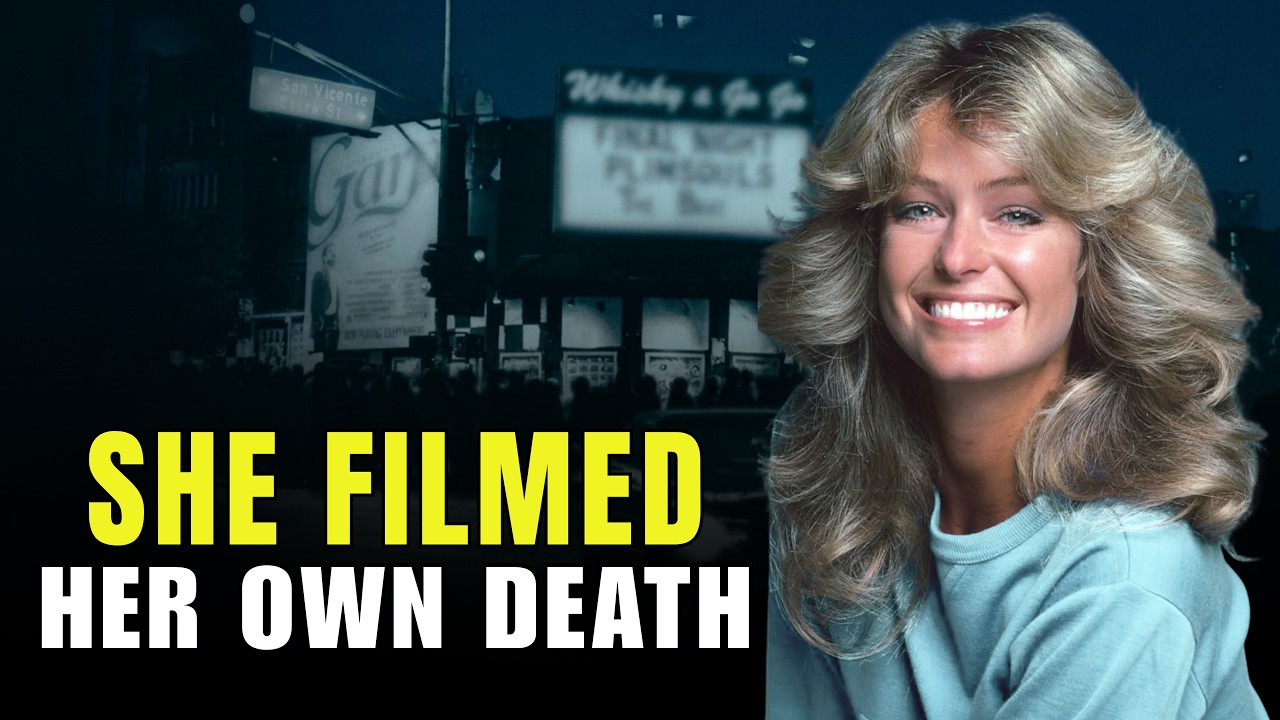
To view that fateful Thursday as the day Farrah Fawcett was forgotten, however, is to fundamentally misunderstand the fierce autonomy that defined her life. She was never a passive victim of circumstance, nor was she merely the red-swimsuit-clad silhouette that adorned 12 million bedroom walls. Her departure from Charlie’s Angels at the absolute zenith of its syndication success was not a whim—it was an act of artistic rebellion. When the gatekeepers of show business attempted to trap her in a cage of blonde hairspray and sunny smiles, Fawcett walked away from the most lucrative contract in television because she demanded to be seen as an artist, not an asset.
The industry punished her defiance with lawsuits and skepticism, yet she engineered a creative resurrection that remains a masterclass in professional grit. Her raw, harrowing performance as a victim of domestic abuse in the 1984 landmark film The Burning Bed shattered every preconceived notion Hollywood harbored, earning her the first of multiple Emmy and Golden Globe nominations. She deliberately stripped away the glamour to hold a mirror up to societal taboos, subsequently tackling heavy roles in Extremities and Small Sacrifices. She proved that her talent was as formidable as her beauty, forcing an unforgiving town to rewrite its obituary for her career long before she fell ill.
Her final chapter, tracked alongside her longtime partner Ryan O’Neal, was perhaps her most radical act of transparency. Diagnosed with anal cancer in 2006, Fawcett chose to turn the camera on her own vulnerability rather than hiding behind high hospital walls. The resulting video diaries, later broadcasted as the raw documentary Farrah’s Story, drew nearly 9 million viewers just weeks before her passing. By exposing her pain, her failing body, and her unyielding spirit, she stripped the stigma from a deeply private disease and transformed her final months into a profound public service.
While the sudden, chaotic deluge of Jackson’s passing undeniably swallowed the front pages that afternoon, history retains a far more permanent memory than a single day’s news cycle. The frantic race for digital clicks on June 25 temporarily obscured a quiet, monumental truth: Farrah Fawcett had already won her war against anonymity. She did not need the evening news anchors to validate her status, because she had spent thirty years cementing it through sheer force of will. She died exactly as she lived—on her own terms, leaving behind an indelible blueprint of female agency in an industry designed to suppress it.