The “5,000-Year-Old Sumerian Cell Phone”: How a Modern Metaphor Became History’s Most Ridiculous Internet Hoax
In an era where digital content spreads faster than factual verification, truth is often the first casualty. For years, social media feeds have been periodically disrupted by a sensational claim: archaeologists allegedly unearthed a 5,000-year-old clay “cell phone” inscribed with Sumerian cuneiform script. Conspiracy theorists, UFO hunters, and sensationalist tabloids rushed to proclaim it as definitive proof of time travel or ancient alien intervention. However, a rigorous journalistic investigation reveals a reality far removed from extraterrestrial visitations, exposing a web of internet deception that hijacked a legitimate piece of contemporary art.
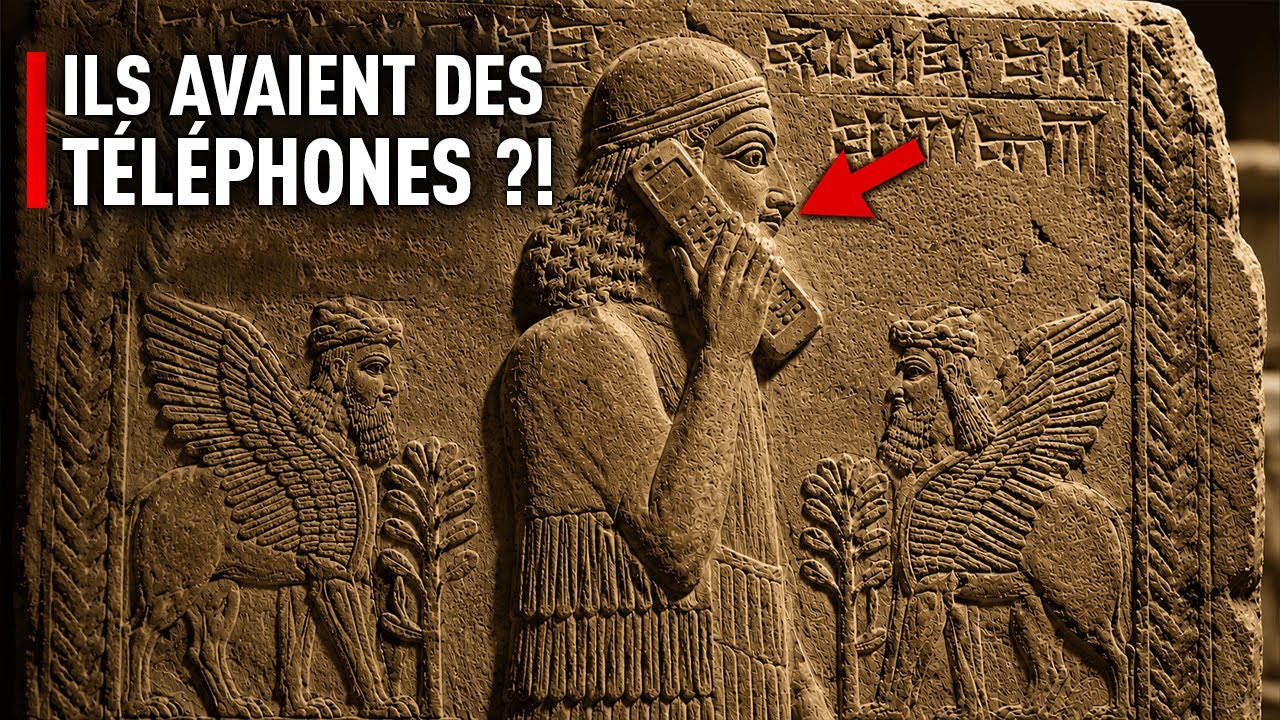
The object at the center of this global frenzy is not an ancient artifact, but a 2012 artwork titled Babylonokia. It was meticulously crafted by Karl Weingärtner, a visionary German artist who sculpted the piece from clay. Weighing just 91 grams, the sculpture was designed as a creative reaction to a museum exhibition in Berlin titled From the Cuneiform to the SMS: Communication Once and Today. Weingärtner’s creation was intended to be a profound metaphor. By embedding ancient cuneiform characters onto a clay replica of a 1990s Ericsson S868 mobile phone, he sought to symbolize the thousands of years of evolution in human information transfer.
The peaceful life of this art piece shattered when its imagery was weaponized by pseudo-archaeology networks. A photograph of Babylonokia was stripped of its original context, copyright, and artistic attribution. Fringe channels, most notably the YouTube channel Paranormal Crucible, manufactured a wild narrative. They claimed the object was an “800-year-old mobile phone” discovered during an archaeological dig in Salzburg, Austria. The geographical displacement to Austria was completely fabricated, designed to add an elite layer of mystery to an already absurd narrative.
The spread of this hoax highlights the dangerous mechanics of modern misinformation. Mainstream media outlets, eager for viral clicks, amplified the unverified claims. Headlines blared questions about ancient advanced civilizations, while completely ignoring basic historical logic. Cuneiform script, developed by the Sumerians in Mesopotamia, had entirely ceased to exist by the 5th century AD. The idea that it would organically appear on a 13th-century European artifact is an absolute historical impossibility. Yet, the allure of a mystery proved more lucrative than historical accuracy.

For Karl Weingärtner, the creator of Babylonokia, the viral distortion of his work was deeply frustrating. His intellectual property was stolen to fuel conspiracy theories he never supported. In interviews, Weingärtner expressed dismay that his photo was used without his knowledge or consent, twisting a critical commentary on the negative impacts of information technology into a circus of fake science. Instead of sparking a dialogue about the evolution of communication, his art became an emblem of digital gullibility.
This case serves as a stern warning for the digital age. The “Sumerian cell phone” did not fool the archaeological community; it fooled an internet culture that prioritizes shock value over source verification. In a landscape flooded with altered images and out-of-context media, the responsibility falls squarely on the reader—and responsible journalists—to trace claims back to their original creators.
Ultimately, Babylonokia did achieve its artistic purpose, though in a highly ironic fashion. It proved that while human communication tools have advanced from clay tablets to digital screens, our collective vulnerability to deception remains unchanged. The ancient Sumerians used clay to record permanent, unalterable truths; modern society uses the internet to do the exact opposite.