Sumerian Tablet Reveals Being Created by Enki While Drunk – So Broken Even the Gods Couldn’t Fix It
The ancient clay tablets of Mesopotamia, preserved for millennia in the archives of the Louvre Museum, hold a mirror to a time when divinity was as flawed, unpredictable, and vulnerable to excess as humanity itself. Embedded within the timeless verses of “Enki and Ninmah” and the haunting verses of the Atrahasis Epic is a narrative that challenges the modern concept of immaculate creation. It reveals that our existence, according to the world’s oldest civilization, was born not from sterile perfection, but from the hazy depths of a divine, alcohol-fueled wager.
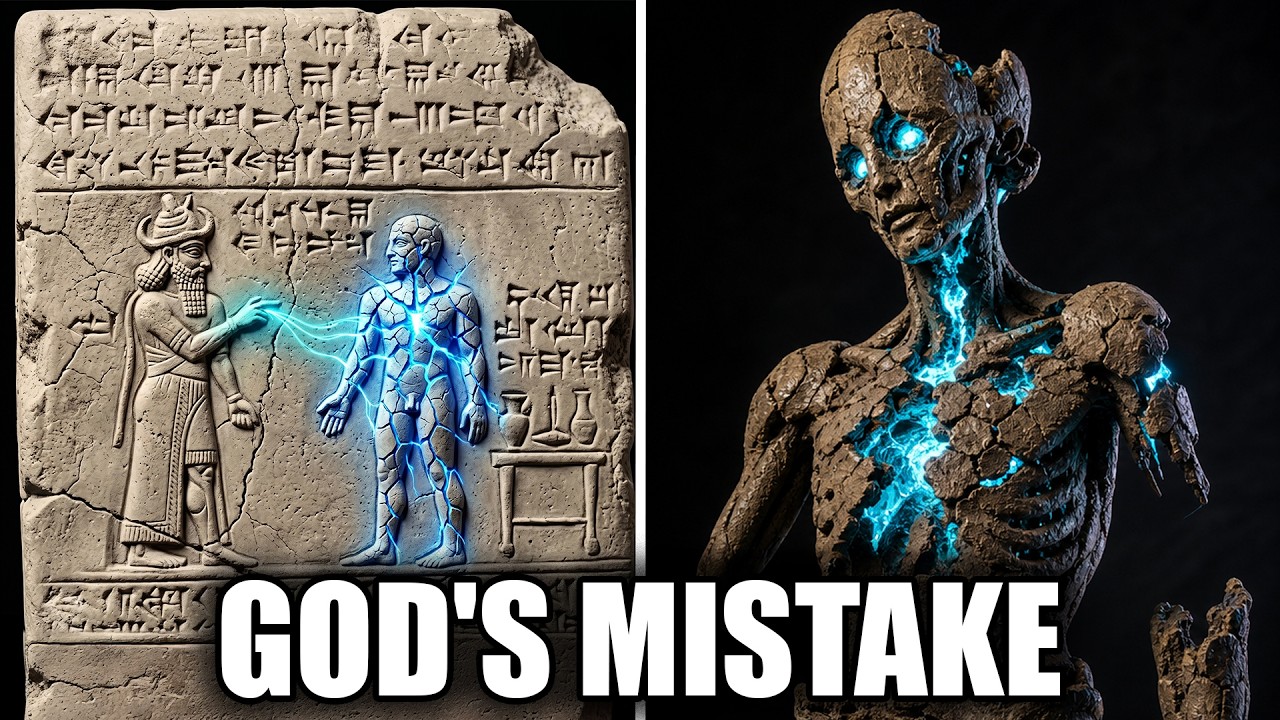
The story unfolds during a grand celestial banquet where the gods sought respite from the backbreaking labor of shaping the cosmos. To relieve themselves of the burden of digging canals and tilling the earth, the god of wisdom, Enki, alongside the mother goddess, Ninmah, forged the first humans from primordial clay and divine blood. Yet, as the celebratory beer flowed freely, the solemnity of creation dissolved into a prideful, drunken debate over who possessed the superior artistic and cosmic authority.
Ninmah, emboldened by the intoxicants, boldly claimed she could alter human destiny at will, rendering any creature inherently good or bad. Enki, the master craftsman known for his unrivaled intellect, countered with a daring challenge: no matter how broken or structurally compromised Ninmah made a human, he would find a functional, respected place for them within the fabric of society. What followed was a competitive exhibition of trial and error, fueled entirely by divine intoxication.
Taking the raw clay, Ninmah fashioned individuals marked by profound physical limitations—including a blind man, a barren woman, and a person with paralyzed feet. True to his reputation, a sharp-minded Enki bypassed their physical ailments to decree their social fates, successfully integrating each one into the community; the blind man was uniquely appointed as a court storyteller, ensuring every “imperfect” creation held a vital, respected purpose.
The narrative reaches its tragic, definitive climax when the roles reversed and Enki took the clay into his own trembling hands. Blinded by the heavy haze of alcohol, Enki crafted a being known as Umul—a creature whose physical form was so profoundly twisted, weak, and functionally compromised that it could neither sit, stand, nor feed itself. It was an entity so fundamentally broken by design that even the master of wisdom himself could not remedy its structural failings.
Faced with the profound helplessness of Umul, a sobered Ninmah admitted absolute defeat, recognizing that this final creation lacked the capacity to fulfill any social role or labor. While modern internet folklore often sensationalizes this myth as proof of an accidental human malfunction, authentic translations from the Electronic Text Corpus of Sumerian Literature reveal a deeper, more nuanced truth. The Sumerians did not view human flaws as a cosmic mistake, but rather as the lasting legacy of a playful, competitive gamble between their creators.
Ultimately, this ancient record serves as a stark theological departure from later monotheistic traditions of perfect creation. It offers a raw, uniquely humanized portrait of the gods, reminding us that the vulnerabilities of our own physical bodies are deeply intertwined with the chaotic, prideful history of the ancient cosmos.