Sumerian Tablet Reveals 4 Places Where You Should NOT Be When Creators Return
The sensational viral rumors claiming that an ancient Sumerian tablet warns of specific “forbidden locations” where humans should not stand when our “creators” return are completely baseless fabrications. In recent years, digital platforms have been flooded with clickbait narratives asserting that newly deciphered cuneiform texts contain apocalyptic coordinates linked to the Anunnaki. However, a rigorous examination of the global archaeological record confirms that no such tablet exists. Mainstream Assyriologists and historians have repeatedly debunked these claims, noting that they are entirely detached from actual Mesopotamian archaeology and are designed solely to generate ad revenue and viral engagements.
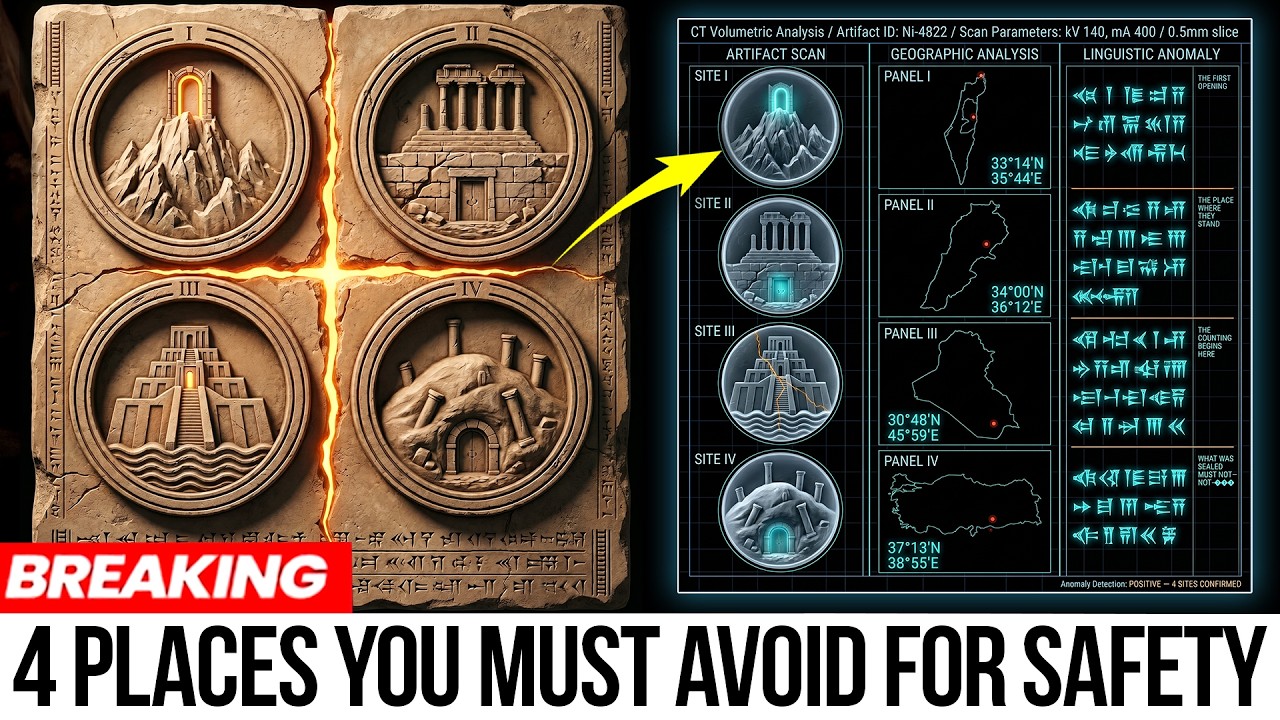
At the very heart of this modern myth lies the figure of Zecharia Sitchin, a late author whose highly controversial, unorthodox translations in the late 20th century laid the groundwork for today’s internet hoaxes. Sitchin claimed that the Anunnaki were ancient astronauts from a hidden planet named Nibiru who genetically engineered humanity. While his books sold millions of copies, elite language scholars and cuneiform experts have comprehensively proven that Sitchin grossly mistranslated the Sumerian language, inventing narratives that the ancient scribes never wrote. Today’s internet influencers simply recycle Sitchin’s discredited tropes, blending them with fabricated details about “four forbidden places” to manipulate gullible audiences.
When we examine the authentic, physical artifacts housed in institutions like the British Museum or the University of Pennsylvania Museum, the real voices of the Sumerians emerge with profound clarity. Authentic tablets, such as the Epic of Creation (Enûma Eliš) or the Atrahasis Epic, do indeed mention the Anunnaki, but they depict them strictly as a traditional pantheon of deities representing primordial natural forces like the sky, earth, and water. These authentic texts reveal that the Sumerians viewed humanity’s purpose as maintaining the earthly realm and serving the gods through agriculture and ritual, completely devoid of any sci-fi warnings about spaceship landing zones or interstellar returns.
The enduring popularity of these pseudo-historical hoaxes highlights a deeply troubling trend in the modern digital media landscape: the rapid weaponization of misinformation over rigorous academic truth. Algorithmic feeds actively incentivize sensationalist content, allowing speculative science fiction to routinely overshadow decades of careful, peer-reviewed archaeological fieldwork. For an ethical journalist, confronting these viral fabrications is not merely about correcting a trivial internet rumor; it is a vital act of intellectual defense aimed at protecting the public from predatory disinformation campaigns that erode historical literacy.
Furthermore, projecting modern extraterrestrial fantasies onto ancient civilizations inflicts a subtle but highly damaging form of historical erasure upon our shared human heritage. By asserting that complex ancient monuments or sophisticated mythological systems could only be conceived through the intervention of alien “creators,” these fringe theories deeply insult the genuine intelligence, creativity, and engineering brilliance of early human societies. The ancient Sumerians did not need cosmic visitors to teach them how to build thriving cities, map the stars, or develop complex mathematics; they achieved these monumental milestones entirely through their own human ingenuity.
From a structural standpoint, the authentic legacy of Mesopotamia is infinitely more fascinating than any fabricated tale of alien prophecy. The clay tablets excavated from ancient cities like Nippur, Ur, and Uruk provide an extraordinary, intimate window into the birth of human civilization, documenting the invention of the world’s first writing system, the establishment of formal legal codes, and the creation of advanced urban planning. These tangible, historical breakthroughs form the foundational bedrock of modern human society, and they deserve to be celebrated for what they truly are, rather than being distorted into cheap, sensationalized internet mysteries.
Ultimately, the responsibility falls squarely upon modern readers and digital consumers to cultivate a sharp sense of media literacy and actively question the validity of unverified historical claims. Before sharing a sensational story about ancient prophecies or forbidden locations, one must demand verified sources, peer-reviewed academic translations, and consensus from legitimate historical institutions. By firmly rejecting the alluring trap of pseudo-archaeology and choosing to honor the verified truths of our past, we ensure that the genuine, brilliant achievements of early human history are preserved accurately for generations to come.