Steve Miller on His Feud with Paul McCartney
The music industry thrives on rumors of explosive rivalries, but the enduring bond between Steve Miller and Sir Paul McCartney stands as a masterclass in genuine artistic kinship. For decades, whispers of friction have occasionally surfaced, fueled by the sheer magnitude of their respective legacies. Yet, history reveals a narrative completely devoid of malice. Instead of a bitter feud, the reality of their relationship is defined by mutual respect, spontaneous studio alchemy, and a shared passion for pushing musical boundaries.
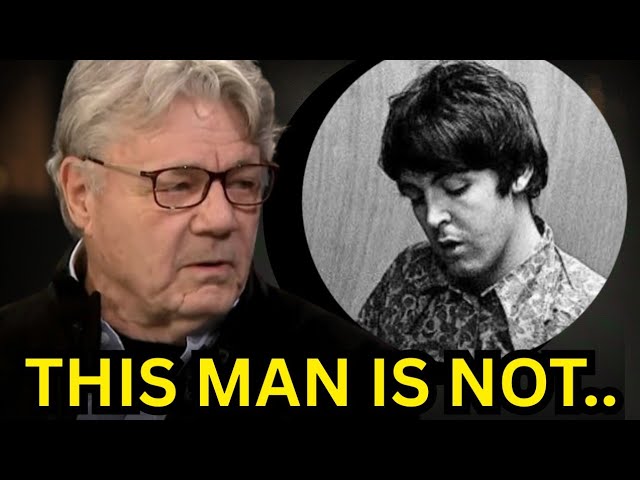
The genesis of their profound connection traces back to a pivotal moment of crisis for The Beatles in May 1969. Tensions were mounting at Olympic Studios in London as John Lennon, George Harrison, and Ringo Starr engaged in a fierce administrative standoff with McCartney over the band’s management. Exhausted and emotionally drained by the corporate fractures threatening to dismantle the Fab Four, McCartney walked away from the argument. He sought refuge not in isolation, but in the sanctuary of pure, unadulterated creation.
By chance, Steve Miller was recording in an adjacent room, facing his own studio setbacks after his bandmates failed to show up for a session. When the frustrated Beatle stepped across the hall, two solitary forces converged. McCartney channeled his raw, pent-up anxieties straight into Miller’s equipment. This impromptu meeting bypassed the usual industry pleasantries, instantly bridging the gap between American blues-rock and British pop royalty through a shared need for emotional release.
Operating under the clever pseudonym “Paul Ramon”—a nostalgic nod to his pre-fame days—McCartney completely immersed himself in Miller’s world. He didn’t just participate; he anchored the track. McCartney took command of the drums, laid down a pulsing bassline, contributed backing vocals, and added blistering guitar tracks. The result of this spontaneous explosion of grief and grit was the classic rock anthem “My Dark Hour,” a track that captured lightning in a bottle.
Reflecting on that legendary night, Miller often emphasizes how effortlessly their creative energies aligned from the very first note. “Paul’s a great drummer… within seconds it was like we had known each other all our lives,” Miller recalled, stripping away the mythology of their status. “He wasn’t Paul McCartney anymore, all of that was gone. We started playing and really kicking it out.” This profound vulnerability laid a permanent foundation for a friendship that defied the standard ego-driven traps of rock stardom.
True artistic chemistry never truly fades, and the duo proved their initial spark was no fluke nearly three decades later. In 1995, McCartney reached out to Miller to recapture that Olympic Studios magic for his critically acclaimed solo album, Flaming Pie. Miller traveled to McCartney’s home studio in Sussex, contributing vocals, co-writing, and playing guitar on standout tracks like “Used To Be Bad.” The sessions mirrored the effortless, low-pressure environment of 1969, solidifying a brotherhood that time could not erode.
Ultimately, the imagined feud between Steve Miller and Paul McCartney serves as a powerful reminder of rock history’s capacity for grace. In an era where conflict often dominates the headlines, their multi-decade alliance stands as a testament to the healing power of collaboration. They transformed corporate frustration into a timeless rock anthem and a lifelong friendship, proving that when the noise of the industry gets too loud, true musicians always find their way back to the music.