Scientists Just Found Something Moving Inside the Loch Ness — This Changes Everything
The mystery of Loch Ness has captivated the human imagination for generations, turning a deep Scottish lake into the epicenter of global folklore. For decades, the world has been caught between the romantic allure of a prehistoric survivor and the cold reality of empirical science. While sensationalized headlines and viral internet videos frequently claim that a new discovery “changes everything,” rigorous scientific investigations tell a vastly different story—one rooted in biology rather than mythology.
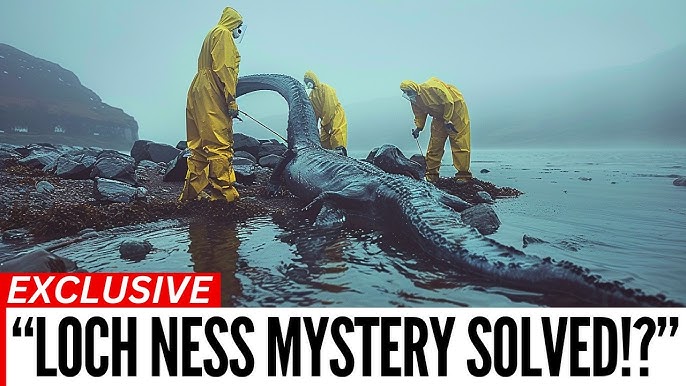
At the heart of modern efforts to demystify the loch is Professor Neil Gemmell, a scientist whose work brought unprecedented clarity to these murky waters. Leading an international team, Gemmell utilized cutting-edge environmental DNA (eDNA) sampling to capture genetic material left behind by every living organism in the lake. His systematic approach aimed to replace speculation with undeniable data, providing a definitive biological snapshot of Loch Ness.
The findings from this landmark eDNA study did not reveal a hidden dinosaur, but they did uncover a striking biological reality. The data showed a complete absence of plesiosaur DNA, effectively debunking the most popular monster theories. Instead, Gemmell’s team detected an overwhelming abundance of European eel DNA, leading researchers to conclude that giant eels—often growing to significant lengths—are the likely source of many historic sightings.
Despite these clear scientific conclusions, the legend remains fueled by a steady stream of technological anomalies and media hype. Enthusiasts frequently point to unexplained sonar blips and artificial intelligence scans that capture “moving targets” within the deep water. However, marine experts emphasize that these fleeting readings are rarely verified and almost always fail to withstand the scrutiny of systematic, multi-beam sonar surveys.
To truly understand why the myth persists, one must look at the psychological and physical phenomena that deceive the human eye. The foundation of the monster’s fame rests on documented hoaxes, most notably the iconic 1934 “Surgeon’s Photograph,” which was later revealed to be a toy submarine. Furthermore, unique natural phenomena known as seiches—internal underwater waves triggered by rapid temperature shifts—frequently create dramatic surface wakes that onlookers easily mistake for a swimming creature.
As a result, the ongoing debate highlights a fascinating cultural divide between scientific literacy and the human desire for wonder. True investigative journalism requires looking past the clickbait titles to analyze the verifiable evidence provided by dedicated researchers. The true marvel of Loch Ness is not a hidden beast, but rather a complex, deep-water ecosystem that continues to thrive while keeping the world watching.
Ultimately, science does not diminish the magic of Loch Ness; it merely redefines it through the lens of truth. Professor Gemmell’s work proves that nature, with its massive eel populations and deceptive physical dynamics, is fully capable of creating its own illusions. The quest for answers will undoubtedly continue, but the data reminds us that the line between myth and reality is best navigated with a critical mind and a commitment to facts.