Maya Codex Describes What Happens to Humans When They Die – And the Trap Their Gods Set
For centuries, humanity has stared into the abyss of mortality, but few civilizations framed the afterlife with such terrifying precision as the ancient Maya. According to sacred texts like the Popol Vuh and the complex astronomical almanacs of the Dresden Codex, death was never a peaceful transition. Instead, it was the ultimate cosmic ambush, orchestrated by sadistic deities who viewed the human soul not as a sacred essence to be saved, but as prey to be hunted, broken, and perpetually recycled.
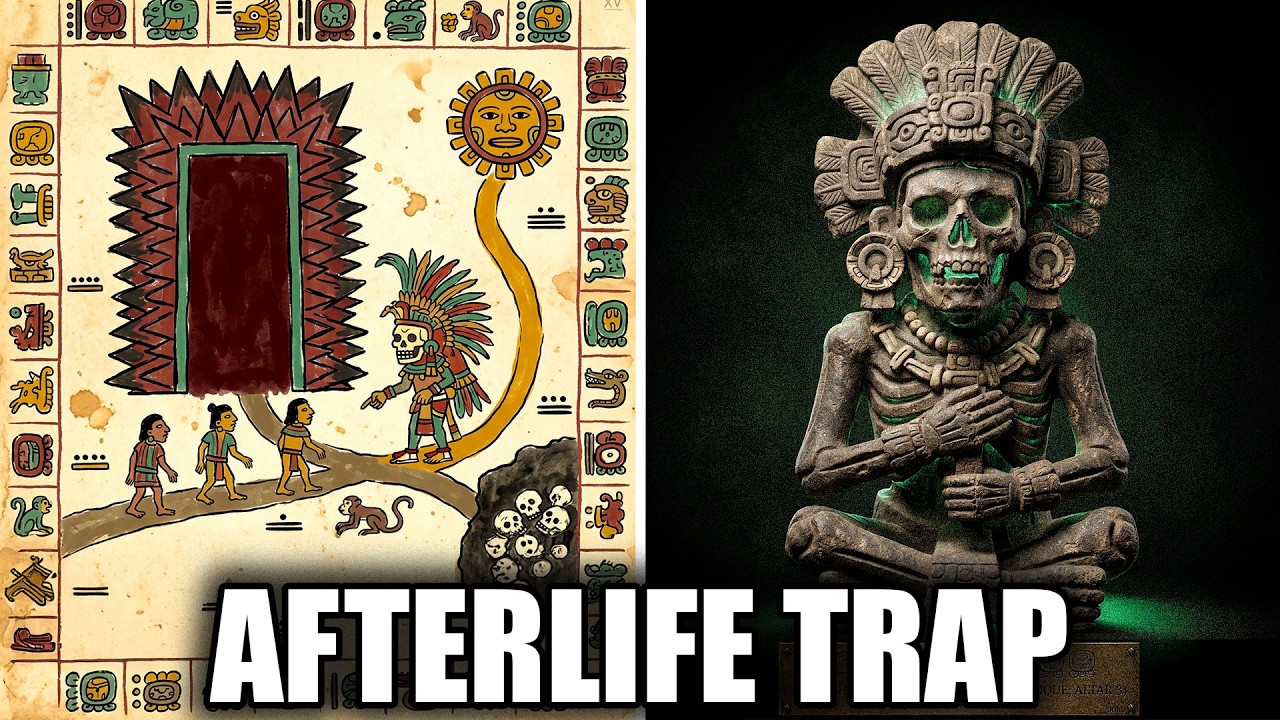
At the dark heart of this cosmological nightmare stands Xibalba, translated literally as “the place of fright.” This was not a passive realm of shadows, but a highly organized, nine-layered subterranean labyrinth ruled by the ruthless lords of death, chief among them the skeletal deity Kimi. The Maya believed that the moment a person’s eyes closed for the last time, their soul was violently thrust into the roots of the sacred Ceiba tree. From there, the deceased had to navigate a gauntlet of horrors designed specifically to shatter their resolve and strip them of their identity.
The journey required traversing rivers thick with blood and pus, walking through orchards of stinging cacti, and enduring chambers of absolute darkness, freezing cold, and razor-sharp obsidian blades. Yet, the physical torment was merely a prelude to the true danger: the psychological traps set by the Lords of Xibalba. These death gods were master deceivers who took twisted pleasure in mocking, tricking, and disorienting newly arrived souls. They demanded impossible tributes and blood offerings, using cosmic bureaucracy and illusion to permanently enslave the unwary.
This divine trap served a grim, utilitarian purpose in the Maya universe. To these gods, human souls were a finite source of spiritual currency and raw energy, desperately needed to fuel the sun, sustain the crops, and maintain the cosmic rhythm. By trapping ordinary souls within their maze, the lords ensured a continuous cycle of transmutation and rebirth. Death was not a final destination, but a forced reincarnation—a perpetual recycling of human energy designed to feed the insatiable appetite of the cosmos.
For the average Maya citizen, escaping this existential trap was nearly impossible without divine intervention or meticulous preparation. The living spent lifetimes studying the sacred calendars, burying their dead with specific jade beads, maize, and protective amulets to act as spiritual currency and rations for the perilous journey. Every funeral was a tactical preparation for a war of wits against deities who held all the cards, turning the afterlife into a high-stakes game of survival where the prize was escaping eternal torment.
However, the Maya cosmos offered a radical, violent loophole to bypass Xibalba entirely. A select few were granted immediate passage to the thirteen heavens, completely immune to the traps of the death gods. This elite group included warriors slain in battle, women who died in the sacred peril of childbirth, and victims of ritual sacrifice. Even the athletes of Pok-a-Tok, the deadly ceremonial ballgame, could claim this glorious ascension, transforming what modern eyes see as tragedy into a triumphant evasion of the underworld’s clutches.
Ultimately, the Maya view of death challenges the comforting narratives found in many modern religions. It presents a stark, uncompromising universe where the gods are not benevolent guardians, but predatory architects of a cosmic system fueled by human sacrifice and endurance. To understand the Maya codices is to understand a people who looked into the afterlife not with serene hope, but with the grim, calculated defiance of a traveler preparing to walk through the jaws of a trap.