Before She Died Johnny Cash’s First Wife FINALLY Revealed the Truth, And it’s Bad
Behind the blinding glare of the “Man in Black” marquee lay a shadow that consumed the life of Vivian Liberto, Johnny Cash’s first wife. For decades, music history painted a picture of a legendary romance between Cash and June Carter, effectively pushing Liberto into the footnotes of country music folklore. However, the reality of her 13-year marriage to Cash was not a background melody, but a harrowing symphony of isolation, terror, and systematic erasure. Before her passing, the truth she revealed dismantled the romanticized Hollywood myth, exposing the devastating human cost of a superstar’s rise.
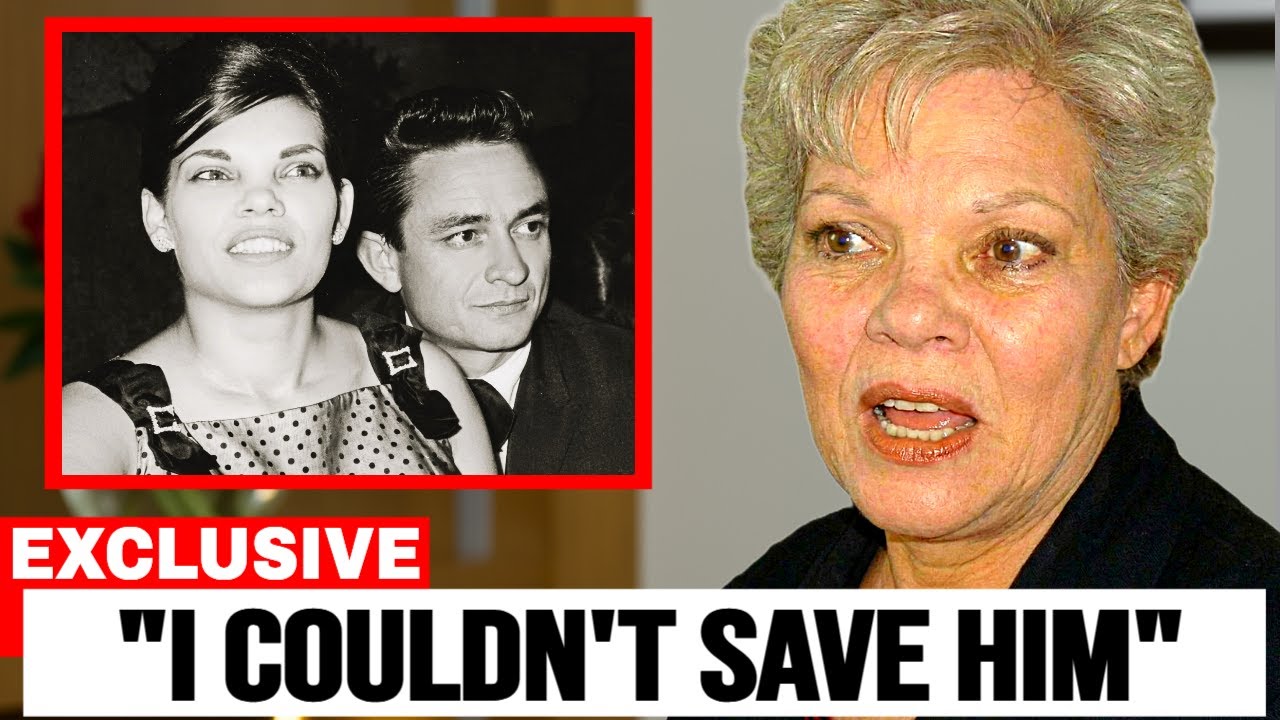
The nightmare began unfolding in the secluded hills of Casitas Springs, California, where Liberto was left entirely alone to raise their four young daughters: Rosanne, Kathy, Cindy, and Tara. As Cash’s career exploded, fueled by a dangerous cocktail of amphetamines and alcohol, his presence at home vanished. Liberto found herself trapped in a prison of fear, forced to confront the dark side of her husband’s fame without any protection. Obsessed fans stalked the property, prowled around her windows at night, and shattered any semblance of domestic safety for a young mother and her vulnerable children.
Yet, the most venomous chapter of her isolation was born from a toxic mix of ignorance and racial hatred. A single, misconstrued photograph of Liberto—who was of Italian heritage—taken at a courthouse sparked a vicious campaign by white supremacist groups who mistakenly believed she was Black. The fallout was immediate and terrifying. Death threats flooded their mailbox, hate groups targeted their home, and the KKK burned crosses. While Cash was shielded by his celebrity status on the road, Liberto was left on the front lines, protecting her daughters from a barrage of racist venom that haunted the family for years.
As Cash’s addiction deepened, the emotional abandonment transformed into active betrayal. The marriage became a battleground of infidelity, dominated by Cash’s increasingly public affair with June Carter. Liberto watched helplessly as her husband drifted away into a drug-addled fog, completely detached from the family they had built together. The divorce in 1966 was not just a legal dissolution, but the final fracturing of a woman who had endured the unendurable, only to be cast aside when the lights of fame grew too bright.
The tragedy of Vivian Liberto did not end with the divorce; it was compounded by a calculated cultural erasure. Popular culture, most notably the Oscar-winning biopic Walk the Line, repackaged the narrative to fit a neatly tailored Hollywood romance. In these retellings, Liberto was often reduced to a bitter, unsupportive caricature—a legal obstacle to Cash’s “true love” with Carter. This systemic rewriting of history effectively wiped her foundational role from the archives of country music, causing immense emotional distress to both Liberto and her four daughters, who watched their mother’s suffering be wiped clean from the record.
In her final years, Liberto chose to reclaim her narrative, breaking her silence through her poignant memoir, I Walked the Line: My Life with Johnny. Supported later by her daughters in the raw documentary My Darling Vivian, she laid bare the unvarnished trauma of her reality. She did not speak out of malice, but out of a desperate, fundamental need for historical justice. She refused to let the industry bury the truth of the sacrifices she made, the terror she survived, and the children she raised entirely on her own while the world cheered for her husband.
Vivian Liberto’s story serves as a stark, journalistic reminder of the human collateral routinely discarded by the machinery of celebrity culture. She was not a footnote; she was the foundation. By confronting the dark reality of her marriage, she forced a rewrite of music history, ensuring that the title of the “Man in Black” would forever be stained by the heavy, invisible toll paid by the woman he left behind in the dark.