The Sumerian Tablet That Lists Every Civilization They Destroyed
In the heart of ancient Mesopotamia, etched permanently into the surface of baked clay, lies a manuscript that has ignited both wild historical sensationalism and profound academic awe. Sensational headlines frequently claim the discovery of a “Sumerian tablet that lists every civilization they destroyed.” Yet, a rigorous journalistic investigation into the actual cuneiform records reveals a narrative far more complex—and politically charged—than a mere tally of ancient devastation.
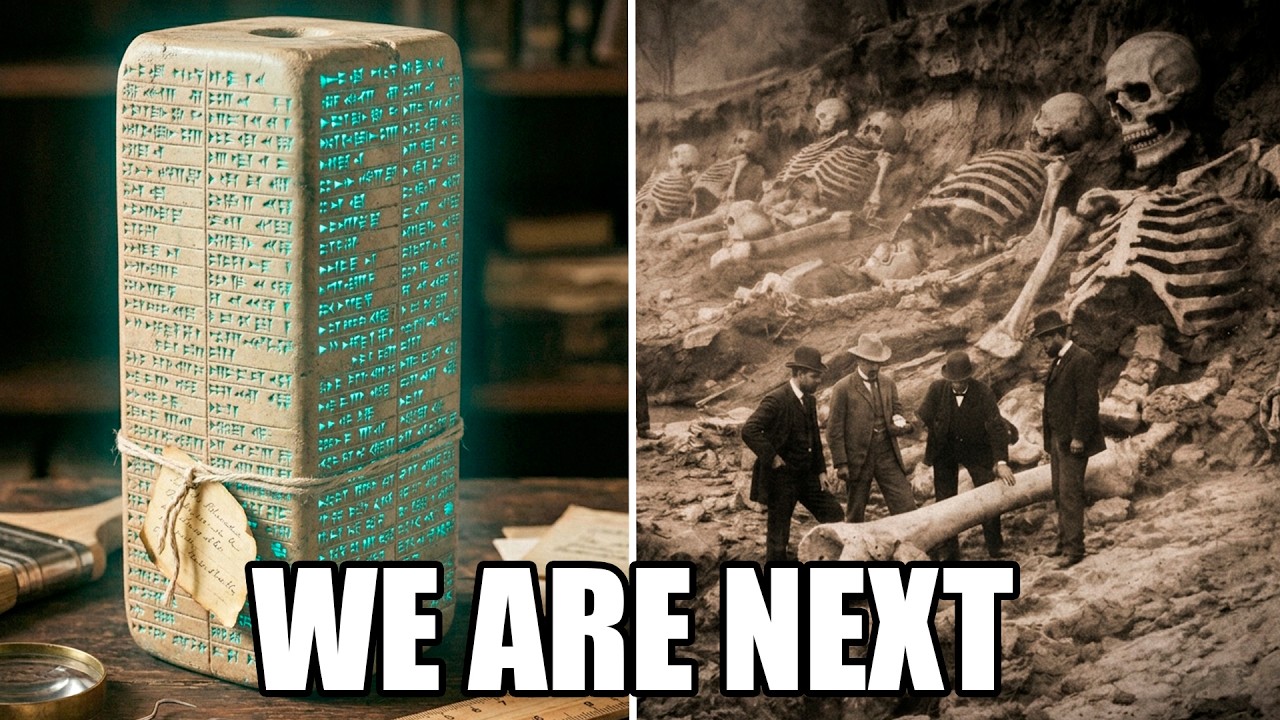
The artifact at the center of this modern whirlwind is the Sumerian King List, a legendary document preserved most beautifully on the four-sided clay artifact known as the Weld-Blundell Prism. Rather than serving as a weapon of mass condemnation, this text acted as a monumental tool of political legitimacy. For the ancient scribes, history was not a record of collateral damage, but a chronicling of a singular, shifting entity: the divine right to rule.
To read the opening passages of the King List is to step directly into a realm where human history blurs with the cosmic. The text explicitly asserts that “kingship descended from heaven,” establishing its first sacred seat in the primeval city of Eridu. In this mythical dawn, rulers were credited with lifetimes spanning tens of thousands of years. It was an era of absolute, uninterrupted divine favor, a golden age that was abruptly shattered when the epic and catastrophic Great Flood swept over the land, resetting the clock of human civilization.
When the waters receded, the nature of power transformed, giving rise to the core structural rhythm of the tablet: the cycle of the “defeated” city. The text systematically documents how kingship was violently or strategically wrested from one city-state and delivered to the next. From Kish to Uruk, and onward to Ur, the manuscript dictates a relentless geopolitical dance. In the eyes of the Sumerians, civilization itself was never truly destroyed; rather, the divine spark of authority simply packed its bags and moved to a new capital.
Yet, embedded within these sweeping metaphysical transitions are the sharp, brutal edges of genuine historical warfare. The later sections of the list shift away from impossible lifespans to record the visceral exploits of authentic mortal rulers. Consider the definitive decree of Enmerbaragesi of Kish, the king who famously “destroyed Elam’s weapons.” It is here, in the authentic clash of bronze and shield, that the tablet captures the very real, localiz
ed destructions that reshaped the borders of the ancient near east.
As the centuries rolled on, the fragile mosaic of independent city-states found a brief, unified champion in King Lugalzagesi, the ambitious monarch who successfully synthesized the competing factions of Sumer under one triumphant banner. But this unification was merely the prelude to a much grander collapse. The ultimate irony of the King List is that the culture that pioneered writing, law, and urban living was not erased by a singular apocalyptic blow, but was gradually absorbed by the rising tides of foreign empires.
The true agents of Sumer’s final eclipse were not catastrophic disasters, but a succession of highly organized conquerors. The foundational blow came from Sargon the Great, whose formidable Akkadian Empire broke the independent spirit of the city-states. This was followed by centuries of political migration, punctuated by the arrival of the Amorites, and finalized under the administrative rule of the Kassites. Ultimately, the Sumerian King List stands not as a monument to the civilizations Sumer destroyed, but as a hauntingly beautiful obituary of how Sumer itself was slowly, inevitably rewritten by history.