The Unbroken Voice: How Sam Elliott Defied Hollywood’s ‘Tragedy’ Narrative
LOS ANGELES — In an era where clickbait culture routinely manufactures tragedy out of the natural process of aging, Hollywood’s most iconic baritone remains resolutely unbroken. Recent sensationalized videos and internet rumors have painted a grim portrait of Sam Elliott, claiming the 81-year-old actor’s legacy is defined by a “beyond heartbreaking” downfall. Yet, a rigorous look at the veteran actor’s current reality reveals a narrative not of tragic erasure, but of quiet endurance, artistic integrity, and a late-career renaissance that defies the industry’s standard shelf life.
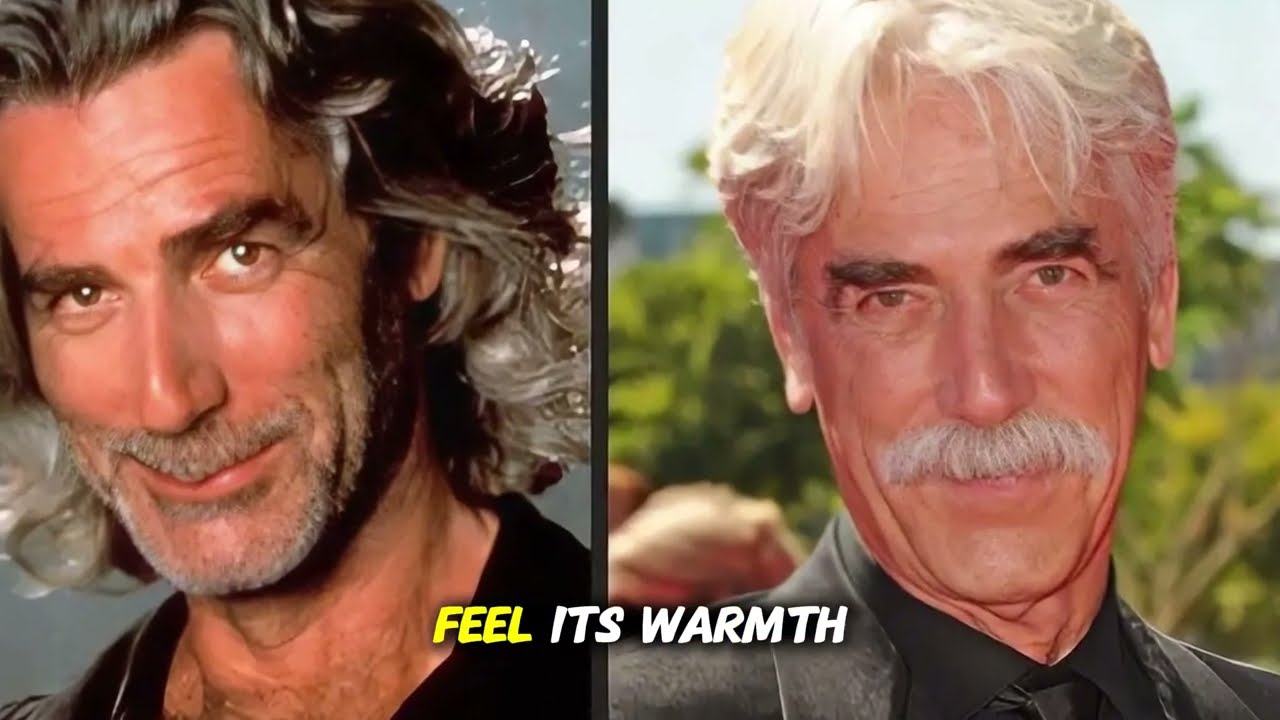
For more than five decades, Elliott has stood as the definitive voice of the American frontier. From his early days as an uncredited extra in Butch Cassidy and the Sundance Kid to his indelible, steel-spined performances as Wade Garrett in Road House and Virgil Earp in Tombstone, he has weaponized a rare authenticity. To look at his early “wilderness years”—a two-decade stretch of near-misses, typecasting, and the quiet grief of a father who passed away before witnessing his son’s cinematic triumphs—is not to witness a tragedy, but rather the forge that tempered his signature grit.
The viral panic surrounding Elliott often points toward his brief brush with public controversy at age 74, a moment that internet commentators claimed threatened to “erase everything.” This narrative, however, fundamentally misunderstands the man behind the legendary mustache. Elliott has never built his security on fleeting public adulation or Hollywood politics; instead, he has anchored his career on the text. As he famously noted to The Guardian during his Oscar-nominated run for A Star Is Born, his security stems from the fact that he has never done a job simply for money.
Today, rather than retreating into silence, Elliott is actively channeling his real-life vulnerability into some of the most profound work of his life. Joining the powerhouse cast of Taylor Sheridan’s neo-Western drama Landman for its second season, Elliott plays T.L. Norris, the estranged father to Billy Bob Thornton’s protagonist. The role is physically and emotionally demanding, portraying a fierce patriarch grappling with the realities of an aging body.
In a remarkably candid interview with Variety, Elliott addressed the physical realities of being an octogenarian actor head-on, effectively dismantling the hyper-dramatic rumors of a hidden illness with pure honesty. Commenting on a heartbreaking scene where his character becomes physically trapped, Elliott admitted the moment hit incredibly close to home. “The truth of it is, that scene is very true to where I am at this point in my life physically,” Elliott shared with refreshing transparency. “I’ve had a hard life. I’ve been an athlete all my life, and I’ve been a laborer all my life, and I’m paying for it now.”
This raw honesty is exactly why audiences continue to flock to his work in the streaming era. Landman has shattered records for Paramount+, crossing over one billion streaming minutes and pulling in over 15 million viewers, largely driven by the emotional gravity Elliott brings to the screen. Behind the scenes, his co-stars revere him; Thornton reportedly wept tears of joy when Elliott agreed to sign a two-year contract for the series, calling the opportunity to share the frame with his longtime friend a profound gift.
Sam Elliott’s true story is not a tragedy of rejection, but a masterclass in stubborn faith. He remains a towering figure in American cinema, proving that true artistry does not fade with age—it merely deepens. As production circles a highly anticipated third season of Landman, the iconic actor continues to look forward rather than backward, proving that his legendary voice still holds the power to captivate millions.