Roger Waters On His FEUD With Bono
The deep-seated animosity between Pink Floyd’s co-founder Roger Waters and U2’s frontman Bono represents one of modern rock history’s most public and bitter ideological clashes. This is not a mere clash of musical egos, but a profound collision of two distinct worldviews, political philosophies, and methods of activism. For decades, both figures have leveraged global stages to champion contrasting human rights causes. However, their divergent paths have ultimately led to an explosive, deeply personal feud that lays bare the fractured state of contemporary celebrity diplomacy.
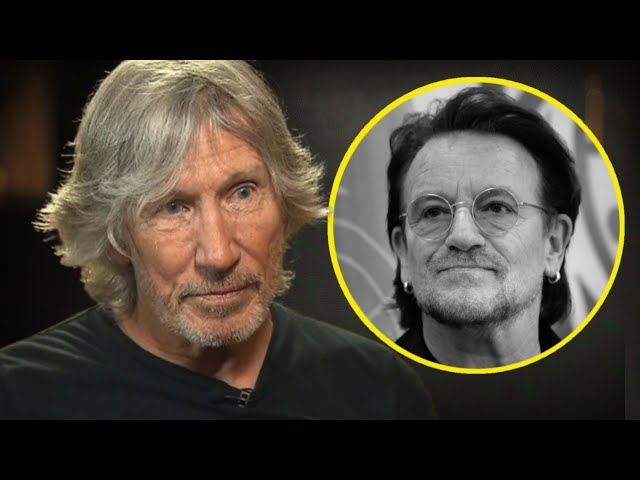
The spark that recently reignited this long-smoldering tension occurred on a stage in Las Vegas in October 2023. During U2’s high-profile residency at the state-of-the-art Sphere, Bono paused the performance to deliver an emotional tribute to the victims of the Nova music festival massacre in Israel. In a moment that quickly went viral, he altered the lyrics of U2’s legendary peace anthem, “Pride (In the Name of Love).” Instead of honoring Martin Luther King Jr. in the opening lines, Bono sang explicitly of the lives lost in the desert, framing his gesture as a universal plea against violence and terrorism.
For Roger Waters, an artist whose fierce anti-Zionist stance and vocal criticism of the Israeli government have defined his late-career persona, this performance was an unpardonable betrayal. Waters broke his silence during a searing interview with Al Jazeera, launching a direct and unvarnished verbal assault against the U2 singer. Visibly incensed by what he perceived as a one-sided political statement, Waters openly denigrated Bono’s character, using remarkably harsh profanity. He went so far as to publicly state that people should “shake him until he stops being an enormous s***,” signaling a complete breakdown of professional courtesy.
Waters did not allow the controversy to fade, actively expanding his media campaign to ensure his condemnation resonated globally. Appearing on the high-profile digital program Piers Morgan Uncensored, the veteran bassist doubled down on his rhetoric, branding Bono’s Sphere tribute as “disgusting” and intellectually dishonest. To Waters, altering a song originally written to honor the American civil rights movement to address the highly volatile geopolitical crisis in the Middle East was an act of gross political manipulation. The interview underscored a rigid ideological divide, with Waters refusing to offer any concession to Bono’s humanitarian framing.
Yet, to view this explosive confrontation solely through the lens of recent Middle Eastern politics is to ignore a much older, structural resentment. Investigative looks into their shared history reveal that the roots of this bitterness stretch back over forty years to the peak of Pink Floyd’s commercial dominance. Waters has previously disclosed that his grievance began when Bono allegedly “turned his nose up” at Pink Floyd’s magnum opus, the 1979 album and theatrical tour The Wall. For a conceptual artist like Waters, who poured his personal traumas into that project, such artistic dismissal from a rising peer was an insult that time could not erase.
This historical context reveals a fascinating psychological dynamic between the two rock icons. Bono has built a career on mainstream institutional activism, comfortably rubbing shoulders with world leaders, corporate executives, and global entities to achieve incremental philanthropic goals. Waters, conversely, operates as an uncompromising, anti-establishment iconoclast who views institutional power with deep suspicion and demands radical, systemic change. When Bono modified “Pride,” Waters did not just hear a song lyric change; he saw the ultimate manifestation of a corporate rock star validating status-quo narratives.
Ultimately, the escalating warfare between Roger Waters and Bono serves as a sobering case study in how music, politics, and personal pride intersect in the modern media landscape. Their ongoing feud reminds us that the stage is no longer just a space for artistic expression, but a fiercely contested ideological battleground. As both aging legends refuse to back down, their words leave an indelible mark on their respective legacies. It proves that in the realm of stadium rock activism, some walls are built so high that no amount of shared musical heritage can ever tear them down.