The Mount Of Olives Is Splitting: Is Jesus’ Return Happening Right Now?
The Mount of Olives, an iconic peak standing sentinel over the Old City of Jerusalem, has suddenly found itself at the epicenter of a modern digital storm. Virally charged videos and frantic social media posts fly across the internet, claiming that this ancient hill is physically splitting in two. For millions of believers worldwide, this is not a mere geological anomaly; it is the long-awaited catalyst of the apocalypse. They point to ancient biblical prophecies, wondering aloud if the very fabric of the earth is tearing open to signal the immediate, cataclysmic return of Jesus Christ. Yet, beneath the layers of digital panic and sensationalized headlines lies a much deeper, more grounded truth that requires careful dissection.
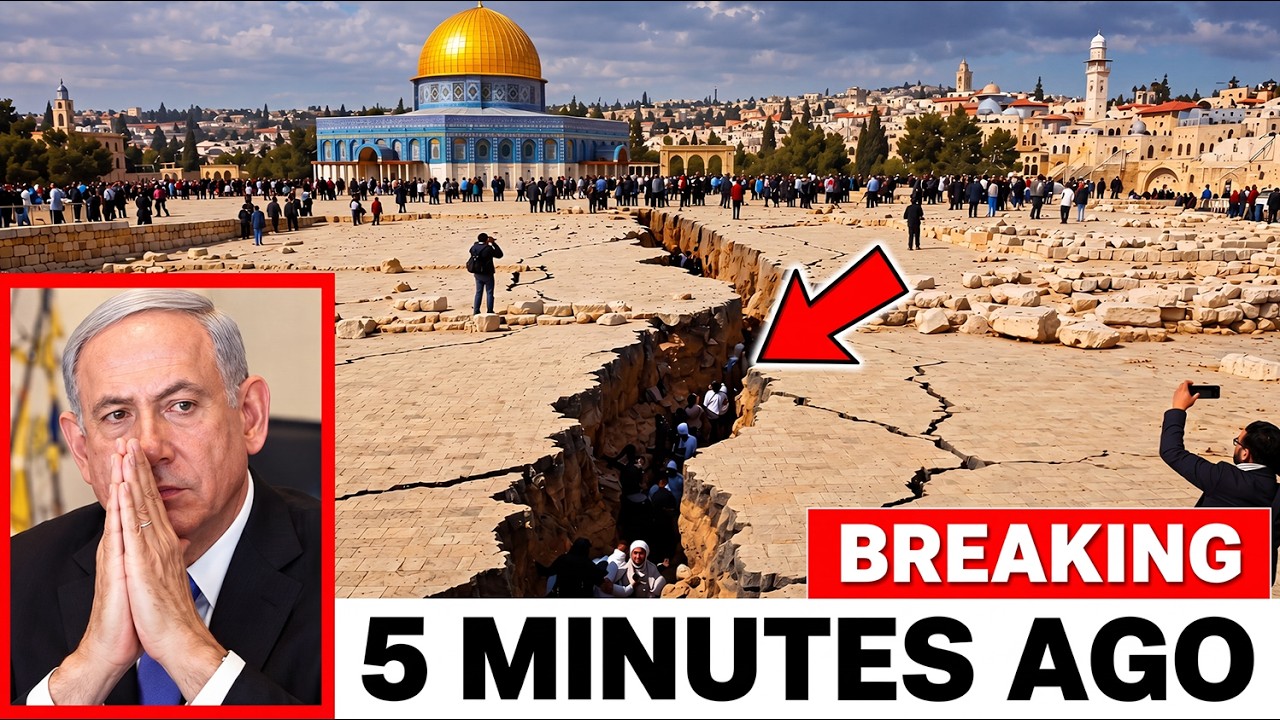
To understand the emotional gravity gripping the global community, one must look closely at the text driving the narrative. In the Old Testament, the Prophet Zechariah explicitly wrote that during the final days, the Messiah’s feet would stand upon the Mount of Olives, causing it to cleave in the midst thereof toward the east and toward the west, leaving a very great valley. For faithful readers, this scriptural vision is etched in stone. However, theologians and biblical scholars quickly point out a critical flaw in the modern internet panic: according to the text, the splitting of the mountain is a direct consequence of the divine arrival, not a slow, mechanical prelude. Furthermore, the New Testament explicitly warns that this ultimate event will strike unexpectedly, “like a thief in the night,” defying human attempts to track its arrival through slow-moving surface cracks.
Behind the viral footage that has captured millions of screens stands the modern internet observer, often quick to mistake a localized hazard for a cosmic event. What these trending clips actually showcase are not tectonic shifts of biblical proportions, but rather shallow surface fissures, minor localized landslides, and the natural wear of urban infrastructure. In a rapidly expanding Jerusalem, civil engineering, heavy construction, and routine soil erosion frequently scar the ancient limestone slopes. To the untrained eye of a smartphone witness, a cracked asphalt road or a destabilized retaining wall on the hillside is easily transformed into an apocalyptic omen, demonstrating how easily structural degradation can be repackaged as a supernatural event.
This is not to say that the Mount of Olives is entirely static, as structural geologists from the Geological Survey of Israel have spent decades mapping the region’s complex subsurface reality. Science confirms that Jerusalem does indeed sit near a highly active tectonic zone—the Dead Sea Transform fault system, located just over twenty kilometers to the east. This deep rift valley has unleashed devastating earthquakes throughout human history, leaving clear marks in the region’s archaeological strata. Therefore, while minor tremors and shifting soils are a verified scientific reality for the mountain, the specific, massive transcurrent fault required to tear the mountain cleanly into northern and southern halves simply does not align with the current localized fracturing observed on the surface today.
For the global community of believers, this intersection of faith and geology serves as a profound reminder of the delicate balance between spiritual vigilance and critical thinking. Prominent religious thinkers urge their congregations not to be easily swayed by every sensationalized clip that populates their feeds. They emphasize that true faith does not rely on manufacturing panics out of routine geological settling or minor municipal maintenance issues. Instead, the current phenomenon highlights a growing cultural anxiety, where a fragile world eagerly looks to the ancient hills of the Holy Land for any sign of ultimate resolution, sometimes projecting cosmic anxieties onto ordinary soil.
From a journalistic perspective, the phenomenon underscores the immense responsibility of verifying facts before amplifying fear. In an era where algorithms reward outrage and panic over measured analysis, separating natural environmental changes from spiritual milestones is vital. The cracks currently visible on the Mount of Olives are real, but they belong to the realm of geomorphology, rainfall, and urban development, rather than supernatural intervention. Misinterpreting these physical phenomena not only spreads unnecessary alarm but also detracts from the genuine historical and cultural dignity of a site that has been sacred to humanity for thousands of years.
Ultimately, the ancient peak remains standing, unbroken and enduring, serving as a silent witness to both the timeless endurance of faith and the fleeting nature of internet hype. The dramatic valley described by the prophets has not appeared, and the daily life of Jerusalem continues beneath the Mediterranean sun. While the deep mysteries of prophecy will always captivate the human heart, the physical reality of the mountain demands patience, scientific literacy, and a commitment to truth over viral sensationalism. Until a true tectonic or divine event reshapes the landscape, the Mount of Olives stands not as a sign of imminent destruction, but as a testament to history, resilience, and the enduring human search for meaning.