Scientists Compared Mexican DNA to Every Population — The Closest Match Was Unexpected
When geneticists first set out to map the Mexican genome, they expected to find a predictable, uniform blend of European and Native American ancestry. What they discovered instead shattered the conventional understanding of human diversity. Landmark research led by institutions like Stanford Medicine revealed that the internal genetic variation within Mexico is so vast that certain Indigenous groups are as distinct from one another as Europeans are from East Asians.
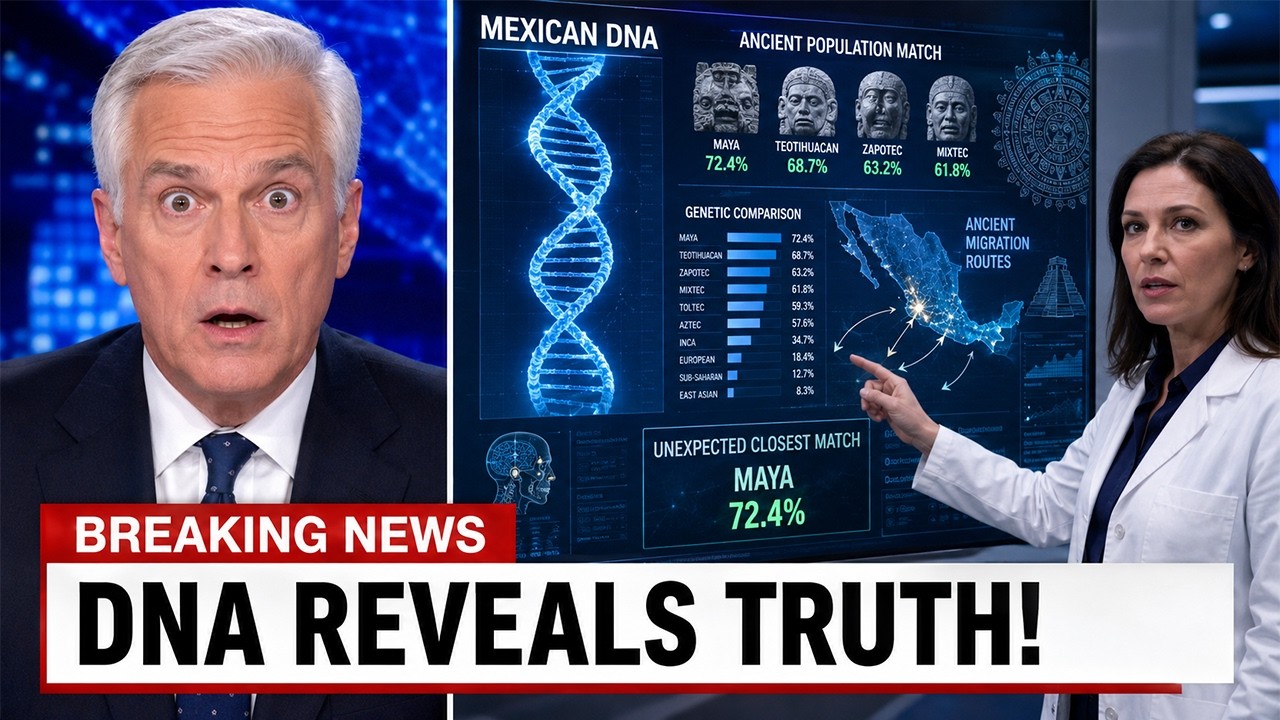
For centuries, the global narrative viewed the Mexican population through a single, oversimplified lens. Yet, when scientists looked closer at the data, the true protagonist of this story emerged: the extraordinary isolation of Mexico’s regional populations. The deep complex geography of the country—filled with rugged mountain ranges and dense jungles—acted as a natural barrier, keeping communities distinct for thousands of years.
The sheer scale of this divergence stunned the scientific community. Researchers identified genetic variations of up to \(14\%\) between certain ethnic groups, particularly when comparing communities from northern Mexico to those in the southern Yucatán Peninsula. In the realm of genetics, a numerical gap that wide is typically reserved for populations living on entirely different continents, not within the borders of a single nation.
This profound diversity is not just a historical curiosity; it has massive, real-world implications for modern medicine. Lung function, for example, varies dramatically depending on an individual’s specific regional ancestry. A medical treatment or diagnostic baseline that works perfectly for a patient in Sonora could fail or misdiagnose a patient from Chiapas, proving that standard “one-size-fits-all” healthcare fails to capture the reality of Mexican biology.
Beyond internal isolation, the data also uncovered unexpected global actors hidden within the DNA. While the foundational roots of Native American ancestry trace back to ancient migrations from Northeast Asia, coastal populations revealed a much more recent international connection. In states like Guerrero, researchers detected undeniable traces of Filipino ancestry—reaching up to \(14\%\) in some individuals.
This unexpected Asian connection breathes new life into the history books. It provides undeniable, biological evidence of the Manila-Acapulco Galleon trade, which connected Mexico and the Philippines from 1565 to 1815. For 250 years, sailors, traders, and cultural exchange quietly shaped the coastal populations, leaving a genetic fingerprint that remained invisible until modern sequencing brought it to light.
Ultimately, the true surprise of the Mexican genome is that uniformity is a myth. The human history written inside this DNA is far more complex, beautifully fractured, and globally connected than anyone ever anticipated. As genomic science advances, Mexico stands as a premier example of why medicine and history must look past broad racial categories and focus on the deep, localized stories told by our genes.