The Deluge of Deities: How a 4,000-Year-Old Clay Tablet Rewrites the History of Human Doom
The history of human doom is fundamentally challenged by a fragmented Sumerian clay tablet dating back to 1600 BCE. Known as the Eridu Genesis, this ancient text reveals a shocking truth: the Great Flood was not a moral punishment for human sin, but a ruthless administrative purge. It reframes the most famous catastrophe in human memory as an act of cosmic indifference.
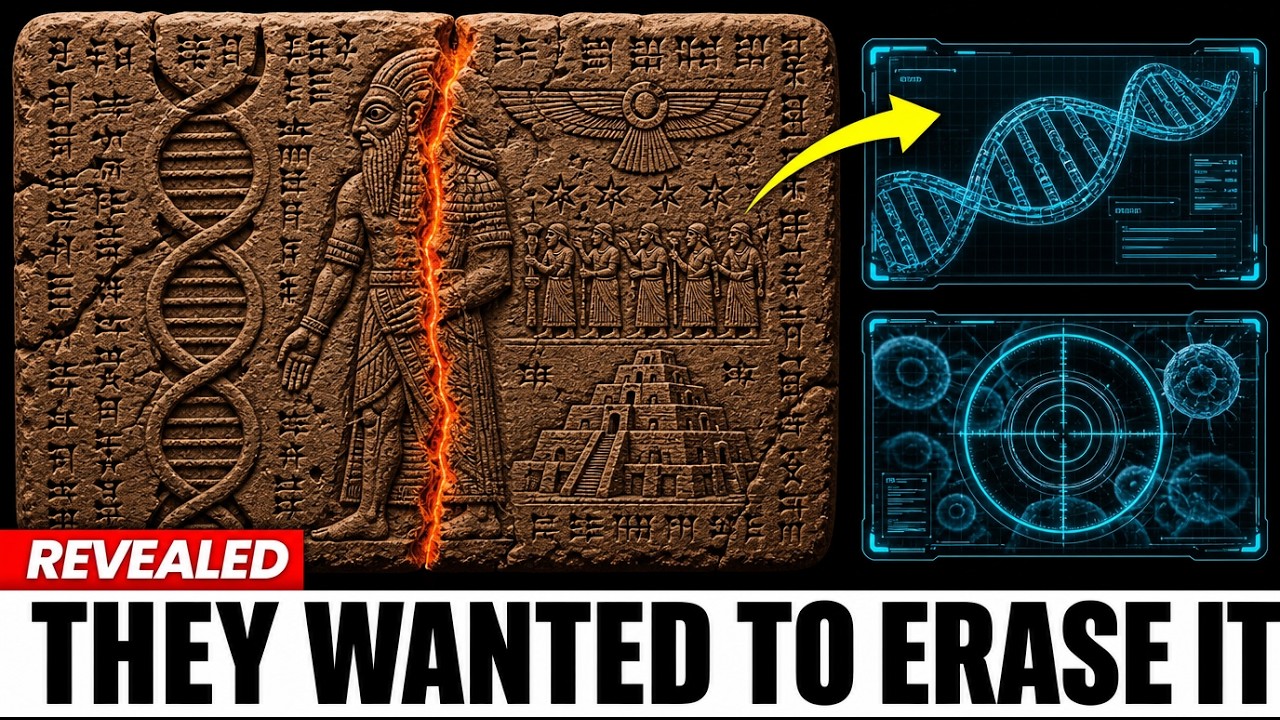
At the dark center of this tragedy stands the supreme deity, Enlil. Driven not by justice but by sheer irritation, he grows furious at the relentless clamor of an overpopulated Earth. To Enlil, humanity is not a beloved creation but a noisy nuisance keeping him awake. He manipulates the divine high council into approving a world-ending deluge to silence mankind forever.
Yet, humanity finds an unlikely savior in Enki, the clever god of wisdom and water. Bound by an oath not to reveal the secret plan directly, Enki exploits a loophole by whispering the warning to a reed wall. On the other side of that wall listens King Ziusudra, a pious ruler chosen to carry the weight of human survival.
Guided by Enki’s secret intelligence, King Ziusudra undertakes a desperate race against time to build a massive, life-saving vessel. For seven terrifying days and seven agonizing nights, the floodwaters swallow the earth, erasing civilization beneath a violent, watery shroud. Ziusudra’s unwavering resilience preserves the fragile seeds of mankind and beasts amidst the total destruction of his world.
When the waters finally recede, the devastating reality of what the flood erased becomes tragically clear. The deluge did not just wash away cities; it completely destroyed the original Golden Age of humanity. Gone was the era where humans walked alongside gods, learned directly from deities, and enjoyed pristine peace.
In the aftermath of the disaster, the gods realize they still depend on human labor, leading to a cruel compromise. Led by Enlil’s begrudging acceptance, the deities permanently alter the human blueprint to prevent future overpopulation. They restrict human capabilities and drastically shorten lifespans, erasing the centuries-long reigns of pre-flood monarchs.
Ultimately, the Eridu Genesis serves as a haunting, timeless record of human resilience against absolute cosmic tyranny. It reminds us that we are not the products of a divine plan, but the descendants of a narrow, heroic escape. This ancient tablet stands as a testament to the survival of the human spirit when abandoned by the cosmos.