Ancient machinery discovered underground — and science has no answers.
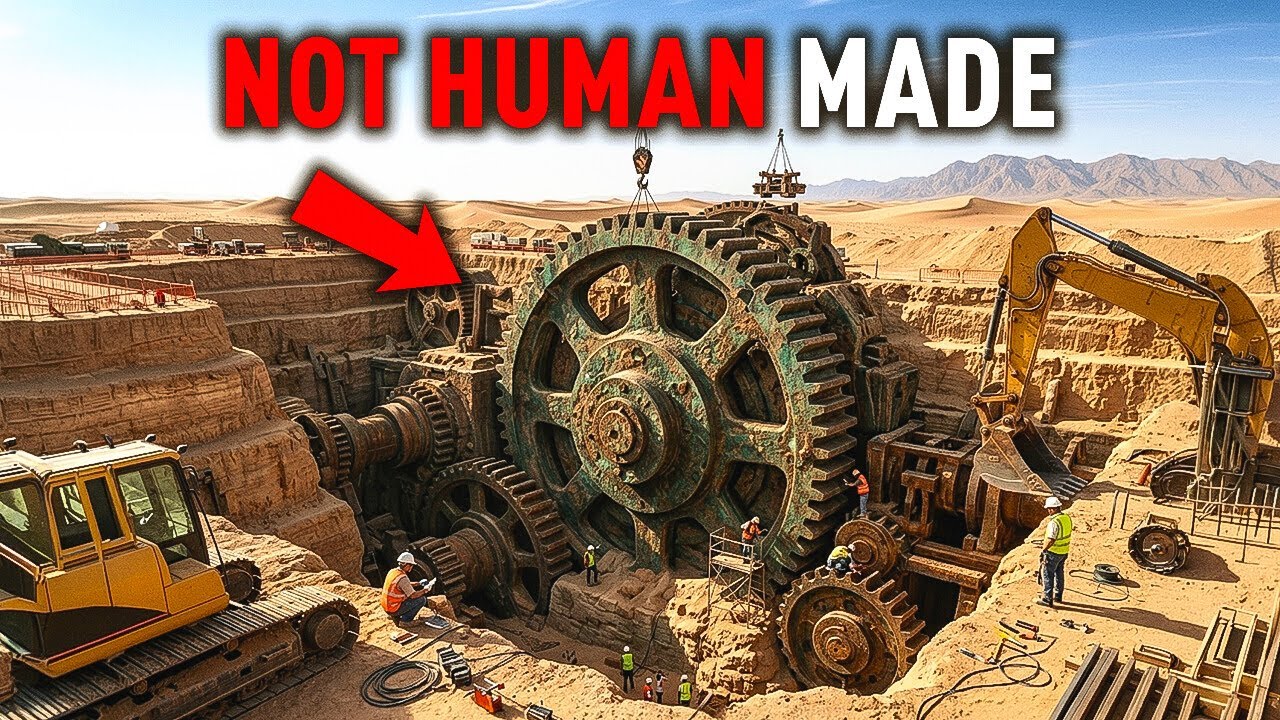
The sensationalized claims circulation online about “ancient machinery discovered underground with no scientific answers” highlight a growing modern dilemma. Audiences are routinely bombarded with calculated clickbait engineered to exploit fascination with the unknown. For decades, self-proclaimed alternative historians have weaponized these headlines to undermine legitimate research. They suggest that academic institutions intentionally suppress evidence of highly advanced prehistoric civilizations or extraterrestrial intervention. However, true investigative journalism demands that we look past the high-energy hype to examine the structural reality of these claims.
The persistent allure of the “out-of-place artifact” thrives on a systematic misinterpretation of genuine archaeological discoveries. Consider the iconic Antikythera mechanism, an intricate bronze device recovered from a Mediterranean shipwreck rather than deep underground caverns. While early observers stood baffled by its complex system of interlocking gears, rigorous scientific collaboration eventually decoded its precise purpose. Utilizing high-resolution 3D X-ray imaging, researchers proved it was a sophisticated mechanical computer used to track astronomical cycles. Instead of alien intervention, it demonstrated the pinnacle of ancient Greek mathematical and engineering prowess.
In sharp contrast to the genuine mystery of Antikythera, other viral sensations rely entirely on visual misdirection and fabricated context. A prime example is the internet myth surrounding “millions-of-years-old mechanical gears” allegedly unearthed in the remote Kamchatka peninsula of Russia. Sensational blogs quickly declared that modern geology had reached an impasse regarding this impossible technology. In reality, independent geologists easily identified the items as fossilized remnants of crinoids, ancient marine animals known as sea lilies. The naturally segmented, wheel-like skeletal structures of these creatures simply mimic manufactured gears to the untrained eye.
Similarly, the famous Baghdad Battery is frequently exploited by theorists to argue that ancient societies possessed advanced electrical grids. These small clay jars, fitted with copper cylinders and iron rods, do generate a minuscule electrical current when filled with acidic liquids like vinegar. However, sensationalists deliberately omit a crucial journalistic detail: the complete absence of any historical wires, conductors, or electrical appliances. Rather than powering ancient machinery, archaeological consensus indicates these artifacts were likely utilized for electroplating jewelry or sealing sacred parchment scrolls.
As a responsible journalist, one must analyze the specific linguistic patterns utilized to spread these modern mythological narratives. Fake science articles consistently deploy ambiguous phrases like “deep within an unnamed cave” or “a team of anonymous researchers” to evade factual verification. They intentionally lack citations from peer-reviewed academic journals such as Nature or Science, relying instead on heavily edited videos or AI-generated imagery. By intentionally keeping the details vague, these content creators successfully shield their claims from rigorous peer review and public scrutiny.
The perpetuation of these mysteries does a profound disservice to the actual brilliance of our ancestors by replacing historical reality with fantasy. Ancient humans did not require extraterrestrial assistance or lost hyper-technology to construct monuments, calculate celestial movements, or engineer survival tools. Their ingenuity was rooted in centuries of empirical observation, trial and error, and a deep understanding of natural materials. Distorting these historical facts for internet engagement minimizes the genuine, documented triumphs of human evolution and cultural development.
Ultimately, the antidote to this digital misinformation is a commitment to healthy skepticism and evidence-based media literacy. When confronted with shocking headlines claiming that science is completely baffled, readers must proactively demand verifiable geographic locations, institutional backing, and material evidence. True science is never afraid of a mystery; it is an open system designed to adapt whenever new empirical data emerges. By demanding rigorous standards of proof, we protect the integrity of human history from becoming a casualty of online sensationalism.