These Hieroglyphs Reveal How Ancient Egyptians Actually Cut Granite — And The Machine They Used
The enduring mysteries surrounding the engineering marvels of the pharaohs find their answers not in science fiction or alien intervention, but in the sophisticated, human-driven mastery of materials, physics, and relentless manual labor. For centuries, the sheer scale of the monuments dotting the Nile has baffled onlookers, sparking endless debates about how primitive societies could manipulate rock as unforgiving as granite. The truth, emerging from meticulous archaeological excavations, reveals an astonishing narrative of ancient stonemasons who weaponized basic elements—water, sand, and copper—to conquer the hardest geological formations on earth.
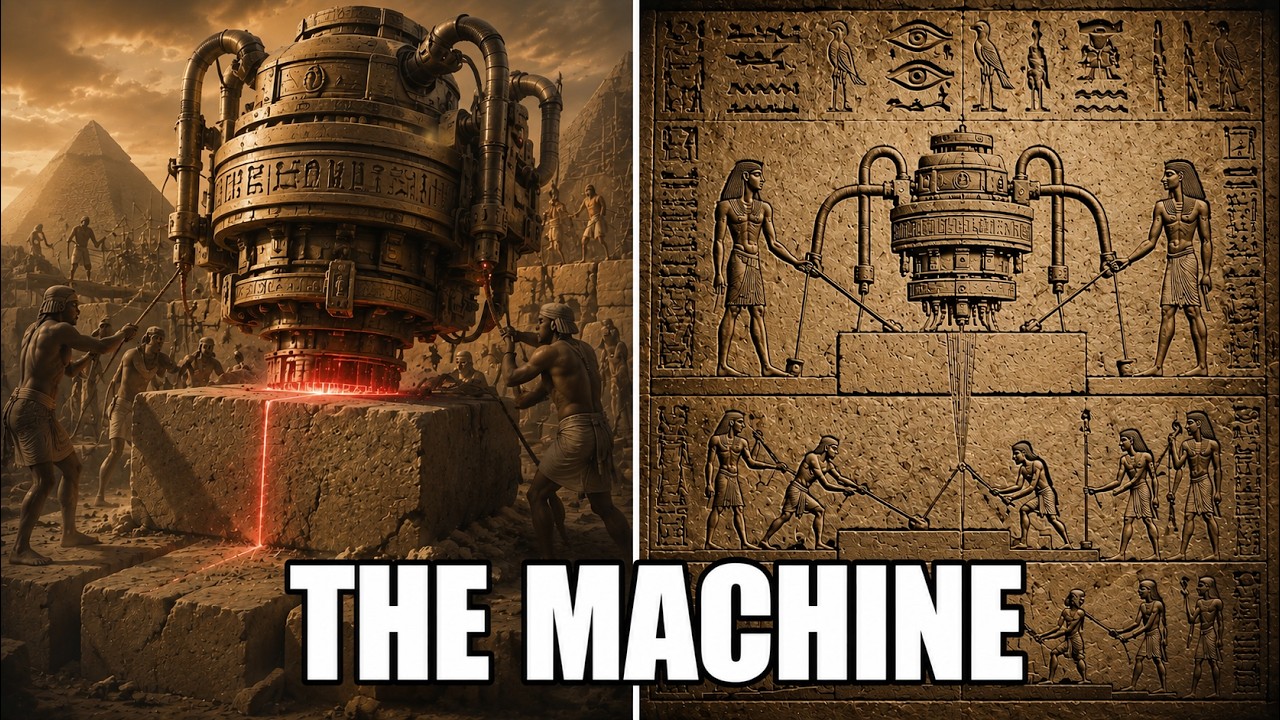
At the absolute center of this monumental industry stood the ancient Egyptian quarry worker, an artisan whose daily life was defined by dust, sweat, and an unparalleled understanding of friction. These craftsmen realized that pure copper tools were too soft to pierce granite, which ranks high on the Mohs hardness scale. To overcome this limitation, they transformed simple copper saws and tubular drills into guides for a wet, abrasive slurry composed of quartz sand and water. This grinding paste acted exactly like a modern diamond blade, allowing the workers to wear away the stone millimeter by tedious millimeter, leaving behind the precise concentric groove rings we still see on ancient artifacts today.
The epic journey of every monument began at the legendary northern quarries of Aswan, a sprawling landscape of pink granite that served as the primary source for the empire’s grandest ambitions. It is here that the famous Unfinished Obelisk still rests, trapped in the bedrock like a sleeping giant and offering modern historians an immaculate window into ancient engineering. To shape and detach such a colossal monument, workers did not rely on complex machinery, but on a specialized technique of pounding the rock with heavy dolerite balls to chip away brittle surfaces, occasionally utilizing strategic firesetting to induce deep fractures in the stubborn stone.
Once these multi-ton monoliths and massive granite sarcophagi were successfully freed from the earth, the monumental task of logistics and transport fell upon thousands of organized laborers. Moving a single obelisk required an intricate network of wooden sledges, heavy hemp ropes, and specialized trackways lubricated with water or oil to reduce friction against the desert terrain. These heavy loads were meticulously dragged to the banks of the Nile, where custom-built cargo vessels waited to float the treasures downstream during the annual flooding season, utilizing the natural current to distribute imperial power across Egypt.
Upon reaching their final destinations, such as the grand temple complexes or the royal necropolises, the true artistry of the master builders was put to the ultimate test. Architects and masonry teams achieved an astonishing level of structural perfection, fitting massive blocks together with razor-thin stone joints that defy modern expectations. By using fine lapping stones and micro-abrasive polishing grids, they leveled matching stone faces so perfectly that even a thin blade cannot be inserted between them today.
Ultimately, recognizing these ancient accomplishments as a triumph of sheer human ingenuity honors the true artisans of the Nile over sensationalist, unverified alternative history theories. The physical evidence left behind in the quarries and temples rewrites the popular narrative of the ancient world completely. It proves that the wonders of Egypt were built not by mysterious, lost technology, but by the brilliant minds, enduring patience, and unyielding physical will of a highly organized workforce.