The Sumerian Temple That Claims Another Civilization Existed Before Recorded History
For millennia, humanity has looked to the horizon of the past, asking a singular, haunting question: where did the story of the city truly begin? The definitive answer does not lie in modern speculation, but rather in the hardened clay of the Sumerian King List, an ancient document that delivers its verdict with absolute, poetic finality. “After the kingship descended from heaven, the kingship was in Eridu.” With those words, the ancient scribes chiseled a deep, permanent line into history, declaring this sacred patch of earth in modern-day Iraq as the absolute birthplace of urban civilization, establishing a sacred, undeniable origin point for human organization.
At the epicenter of this primordial metropolis stood a figure of immense psychological and religious weight: Enki, the Sumerian god of water, wisdom, and creation. To the ancient citizens of Eridu, Enki was not an abstract deity floating in a distant sky, but a hands-on architect of human culture who resided within the E-Abzu temple, the profound “House of the Deep.” It was Enki who was seen as the vital custodian of the Me, the sacred, immutable laws of civilization that governed everything from priesthood to pottery. By anchoring their society to this wise divine figure, the people of Eridu did not just build houses; they constructed a cosmic order, viewing their streets as a direct reflection of divine intellect.
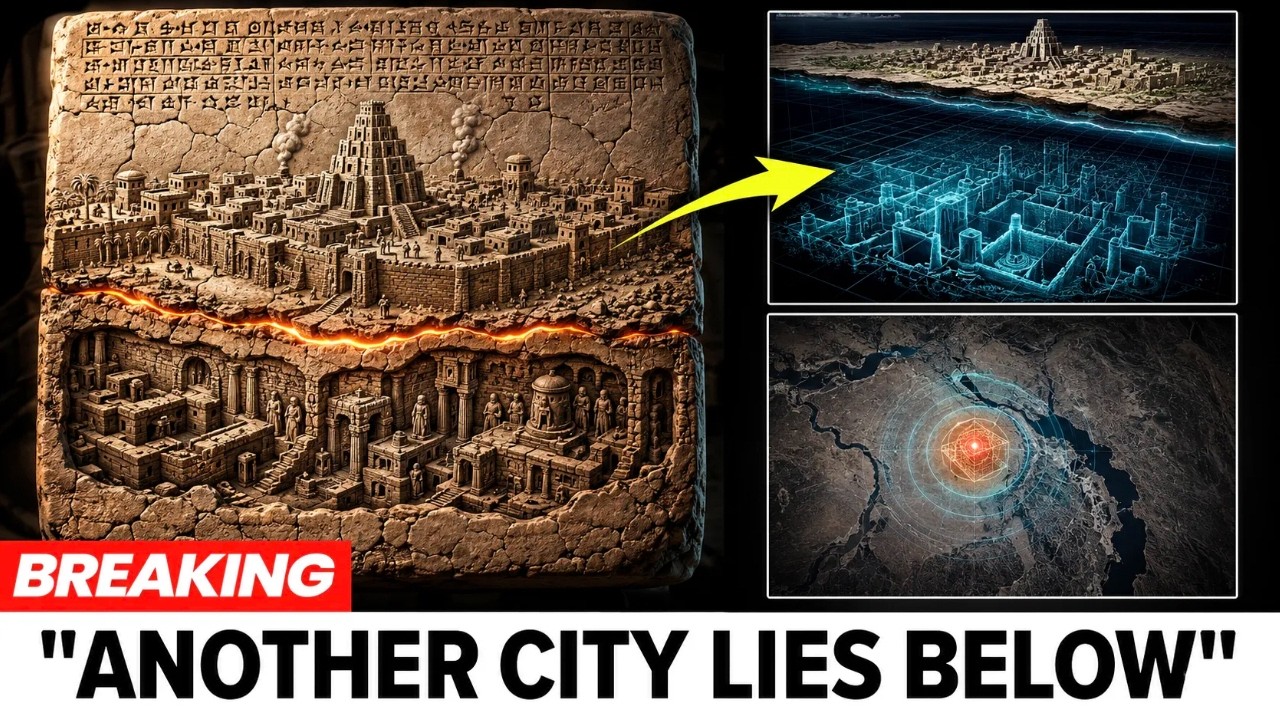
Yet, a journalist looking beneath the grand mythology of kings and gods will find an even more astonishing truth buried in the literal dirt. Beneath the monumental Sumerian structures that captured the imagination of the ancient world, modern archeological excavations have revealed the ghost of a civilization that time almost forgot: the Ubaid culture. This prehistoric, pre-literate society operated in the deep shadows of the chalcolithic era, long before the first cuneiform tablet was ever pressed. It is their deep mud-brick foundations and primitive artifacts that lie silently beneath the later, grander Sumerian temples, proving that the roots of human society run deeper than our written records can reach.
The true protagonists of this deep historical drama are these pioneering Ubaid engineers, individuals whose collective ingenuity transformed the harsh Mesopotamian landscape. Far from being primitive nomads, these people developed complex irrigation networks, cutting channels through the arid earth to tame the unpredictable waters of the Euphrates and Tigris. They engineered a sophisticated agricultural surplus that allowed an early society to stop merely surviving and start thriving. By mastering the art of the mud-brick and establishing permanent, layered shrines, these nameless innovators provided the technological and architectural blueprint that every subsequent Mesopotamian empire would copy.
The physical resurrection of this lost world required the tireless determination of modern explorers, who battled harsh desert conditions to unearth humanity’s oldest secrets. Located in the desolate Dhi Qar Governorate of southern Iraq, about 15 miles south-southwest of the famous ancient city of Ur, the site known today as Tell Abu Shahrain was meticulously excavated by legendary teams from the British Museum and the University of Pennsylvania. Layer by painstaking layer, Iraqi and international archeologists dug through eighteen superimposed strata of temples, moving backward through five thousand years of continuous human occupation to touch the very first shrine built by human hands.
The psychological echo of Eridu’s watery splendor is so profound that it reverberates through the sacred texts of completely different faiths thousands of years later. In its prime, Eridu was a lush, green anomaly surrounded by lagoons and freshwater marshes, a thriving paradise where abundant waters met the desert. Scholars and historians increasingly note that the vivid, romantic descriptions of this water-rich primordial city strongly suggest it served as the cultural inspiration for the biblical narrative of the Garden of Eden. The memory of Eridu was so deeply etched into the human collective consciousness that it became our universal symbol for a lost, golden age of innocence.
Today, the windswept ruins of Tell Abu Shahrain stand as an eternal monument to human ingenuity and the profound achievements of the Ubaid culture. It serves as a stark, humbling reminder that every towering skyscraper, every complex legal system, and every bustling modern mega-city can trace its lineage back to a single, fragile settlement in the marshes of Iraq. The story of Eridu is not merely a chapter in an ancient history book; it is the opening line of the human diary, a testament to the moment we decided to come together, build, and change the face of the planet forever.